A small, urban electric car for changing social and technical conditions in 2030
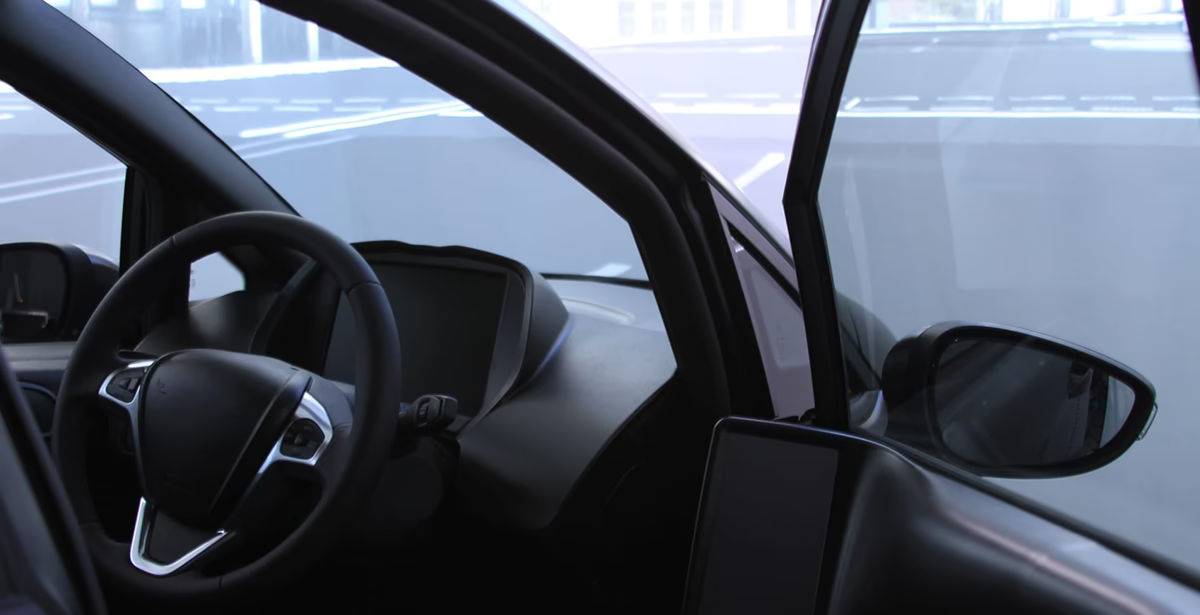
From a small car provided by Ford, we constructed a single-seater passenger compartment. For this purpose, we developed a completely new cockpit with a touchscreen, digital speedometer and 3D mouse.
In 2013, DesignStudio NRW, a joint research project between the University of Duisburg-Essen, Folkwang University of Arts and Ford Werke GmbH, launched the development of the NRW Car 2030. In order to be able to investigate and test your requirements as future users of a purely battery-powered small vehicle, PROJEKTER INDUSTRIAL DESIGN was commissioned to design a driving simulator in collaboration with the Department of Mechatronics at the University of Duisburg-Essen.
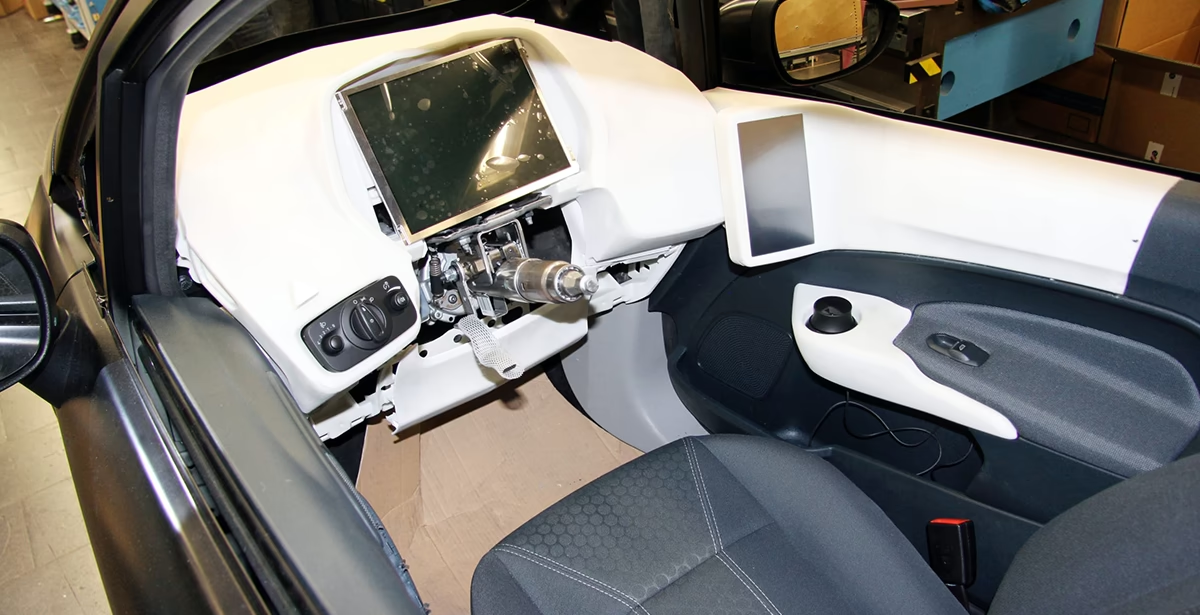
This included adapting all components of the new cockpit trim to the body and designing and manufacturing the individual parts using the selective laser sintering process (SLS).
We mastered the ergonomic challenges of the vehicle interior by optimally coordinating the accessibility of the individual elements of the user interface.
In the coming decades, transport and mobility will continue to switch to sustainable energy sources as well as the networking of various forms of private and public transport.
Electric mobility, autonomous driving and car sharing will play an important role here.
This reduces environmental pollution, relieves our road and motorway network and minimizes the harmful consequences of individual transport processes.
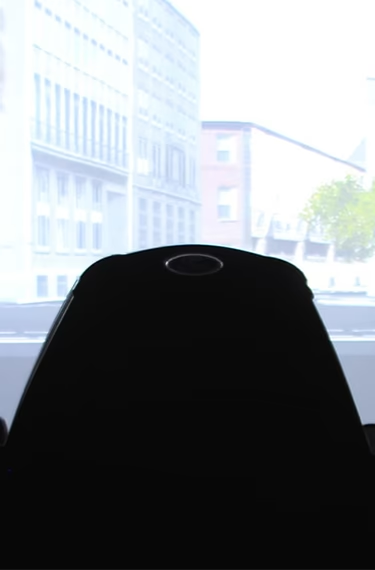
Six linear motors that simulate vehicle movements, a 5.1 sound system for outputting interior and exterior noises such as road noises or oncoming traffic provide a realistic driving experience. A radially arranged screen with a panoramic view completes the simulation.
In this way, individually controlled, automated and piloted driving can be tested and the potential of communication between vehicles and infrastructure in the virtual urban environment of 2030 can be tested.
The development team presented the research results and the driving simulator to NRW Minister Garrelt Duin and the public in November 2013 during a 7-day car clinic in the SANAA building of the Zollverein colliery in Essen.
Since May 2016, the development of an electric sharing vehicle has continued as part of the NRW Car 2.0 research project.