Industrial Design Trends 2026: Why less is becoming more and technology is becoming more human
The world of industrial design is changing. Artificial intelligence is revolutionizing development processes, sustainability is becoming an economic success factor and minimalistic aesthetics meet authentic imperfection. For manufacturing companies and design managers, 2026 will be a decisive year in which new technologies and changing values come together. Which trends will shape product development and how can you use these developments for your own projects?
Artificial intelligence is transforming design processes
Die AI revolution in design It's not science fiction anymore. It's happening now, at this moment, in studios around the world. 2026 marks the point at which AI-based ideation goes from an experimental tool to an indispensable teammate. The technology not only speeds up the research and concept phase, it fundamentally changes how we think about product development.
Imagine: A designer sketches a rough idea, the AI generates 50 variations within seconds, analyses their feasibility and simulates the performance of different materials. What used to take weeks is done in hours. But this is no contradiction to human creativity. On the contrary: AI takes on time-consuming analysis tasks and creates space for what machines cannot do. Conceptual thinking. Emotional intelligence. The ability to read between the lines and understand what users really need
The combination of machine computing power and human intuition results in solutions that neither man nor machine would achieve alone. Companies that integrate AI tools into their development processes at an early stage not only gain speed advantages. They open up completely new innovative potential.
Circular economy becomes a duty and an opportunity
The era of linear thinking comes to an end in 2026. Take, produce, throw away? This model has had its day. Die EU Ecodesign Regulation and the digital product passport create legal frameworks that make circular thinking a business necessity. From 2026, the ban on destruction of unsold textiles and stricter requirements for battery recyclability will also come into force.
But what sounds like a regulatory burden at first turns out to be a massive opportunity. Companies that integrate circular economy into their product strategy are dramatically reducing their dependence on volatile commodity prices. They open up new business models: product-as-a-service, refurbishment programs, material recovery. Sustainable product design In concrete terms, this means designing products from the outset in such a way that materials are reused, components are replaced and resources are used optimally.
The key design principles for recyclable products:
- Modular design: components can be replaced without special tools, defective parts are replaced instead of disposing of the entire product
- Mono-material construction: pure compounds enable higher quality recycling and easier material recovery
- Design for disassembly: Products are designed in such a way that they can be dismantled into their components quickly and without loss at the end of their life
- Durability through timelessness: Aesthetics that outlast trends extend the usage phase and reduce premature disposal
- Integrated take-back concepts: Integrated logistics for product return and reprocessing
Especially in mechanical engineering, electronics and the consumer goods industry, circular design creates measurable competitive advantages. Companies that rely on a circular economy as early as 2026 benefit not only from compliance advantages, but also from cost savings, innovative potential and strengthened brand recognition among increasingly environmentally conscious customers.

Minimalist design meets intuitive user experience
Less is more. This design wisdom is experiencing a renaissance in 2026, driven by collective overload. Consumers are exhausted by feature-laden devices that confuse more than help. They are looking for solutions that are intuitive, that feel like a natural extension of themselves.
Successful industrial design focuses radically on the essentials: clear lines, reduced interfaces and operating logic that can be understood without a manual. Minimalistic design does not mean sacrificing functionality, but intelligent prioritization. Each element serves a clear purpose. Superfluous complexity is eliminated. This reduction results in lower cognitive effort during use and increases satisfaction across all age groups.
Designs that rely on universal accessibility are particularly successful. Large, easy-to-read icons. Color-coded controls. Haptic feedback that provides security. Ergonomics play a central role here: tools that can be grabbed as a matter of course, displays that can be operated without thinking twice, devices that explain themselves.
The combination of minimalistic aesthetics with sophisticated ergonomics creates products that integrate seamlessly into everyday life and remain relevant in the long term. Products that you not only use but appreciate.
Authenticity beats perfect perfection
Something remarkable is happening: After years of high-gloss digital aesthetics, designers and consumers alike yearn for roughness, for texture, for visible traces of craftsmanship. This development is more than just a nostalgic reflex. It is a response to years of dominance of rational design systems and flawless renderings, which, although impressive, are increasingly soulless.
Products with deliberately uneven surfaces are becoming more attractive. Visible material transitions are not hidden, but celebrated. Natural patina is considered a sign of quality, not a flaw. These products tell stories. They appear approachable, authentic, human. Especially in industries that have relied on technical perfection for a long time, this deliberate roughness creates new opportunities for differentiation.
Warm, earthy color palettes replace cool shades of gray. Ochres, burnt reds and deep greens create connections to the natural environment. Materials that develop a patina over time and show their story are deliberately used. Haptic qualities come to the fore: Surfaces should not only look good, but also feel good. An oiled wood handle. A case surface with a light texture. Details that make products companions instead of replaceable goods.
This tendency towards imperfection is more than an aesthetic trend. It reflects a changed value system in which longevity, repairability and emotional connection become more important than flawless new goods.
Faster prototyping cycles through additive manufacturing
The revolution is taking place in the development department. While public debates often revolve around finished products, additive manufacturing quietly but fundamentally transforms how these products are created in the first place. In 2026, companies will be able to test more concepts earlier, validate performance faster, and refine products with dramatically fewer physical iterations.
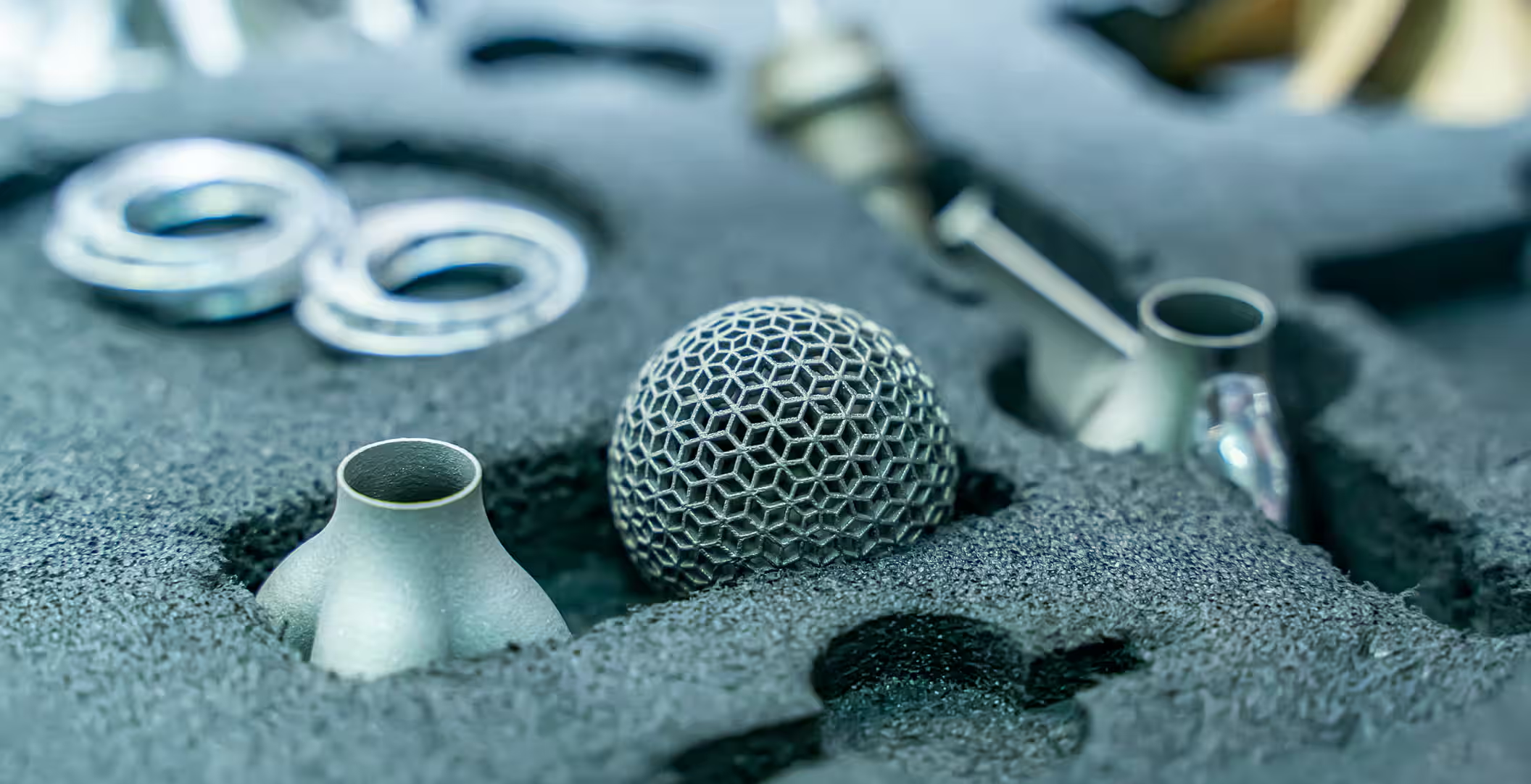
Additive manufacturing processes enable geometries that would simply be impossible with traditional methods. Lightweight structures inspired by bone architecture. Integrated functional elements that no longer require assembly. Individualized components that are precisely tailored to specific requirements. The combination of generative design and 3D printing results in products that are both more resource-efficient and functionally superior.
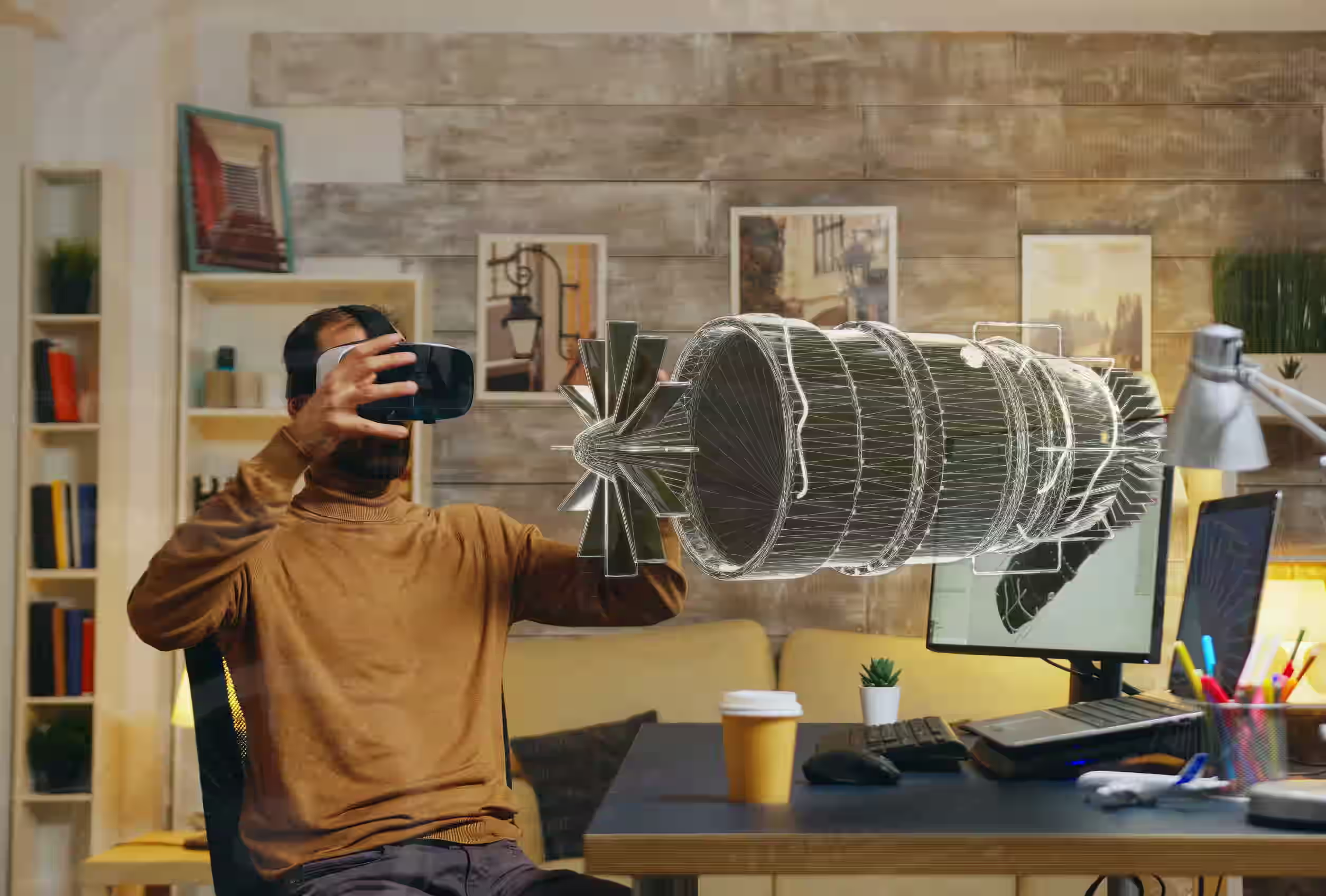
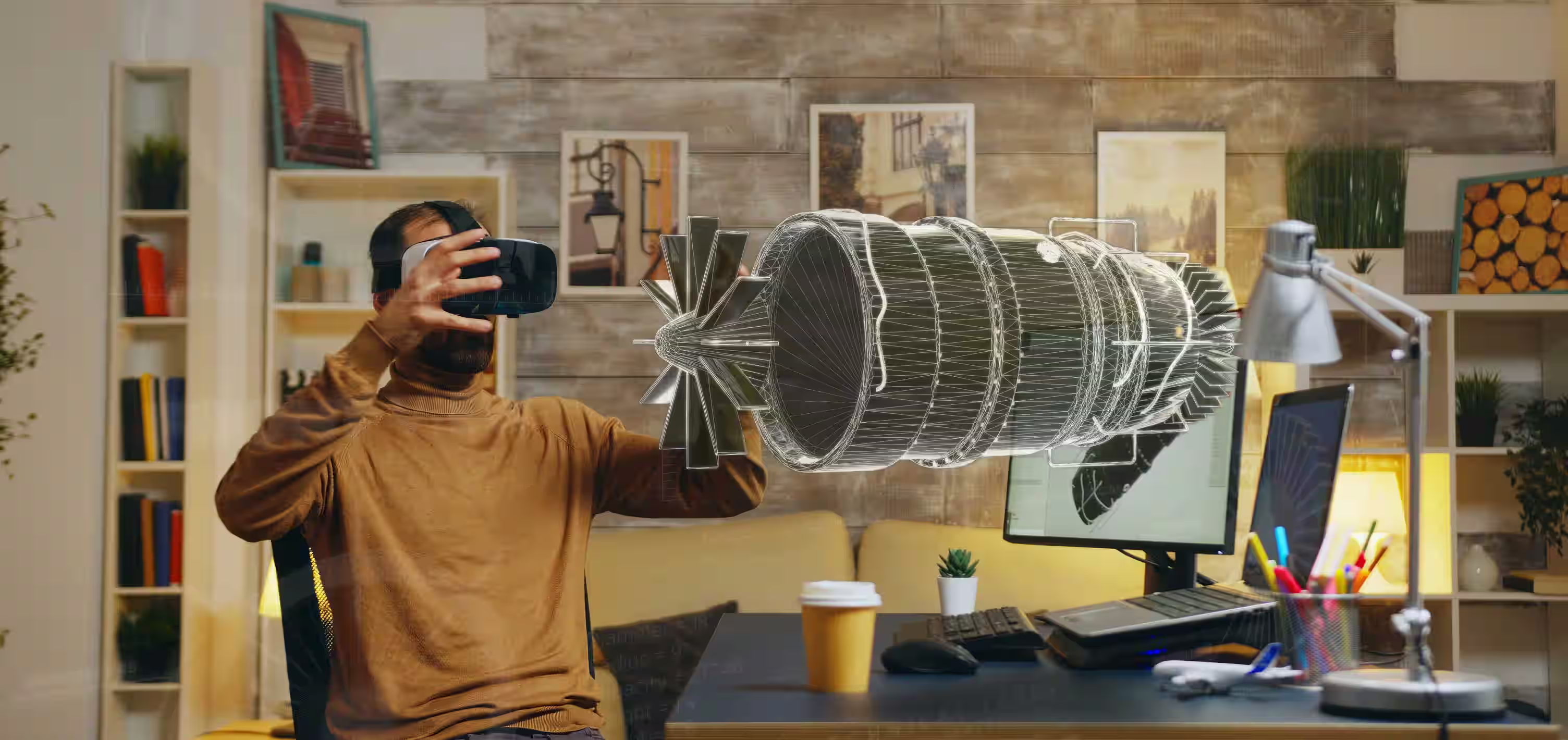
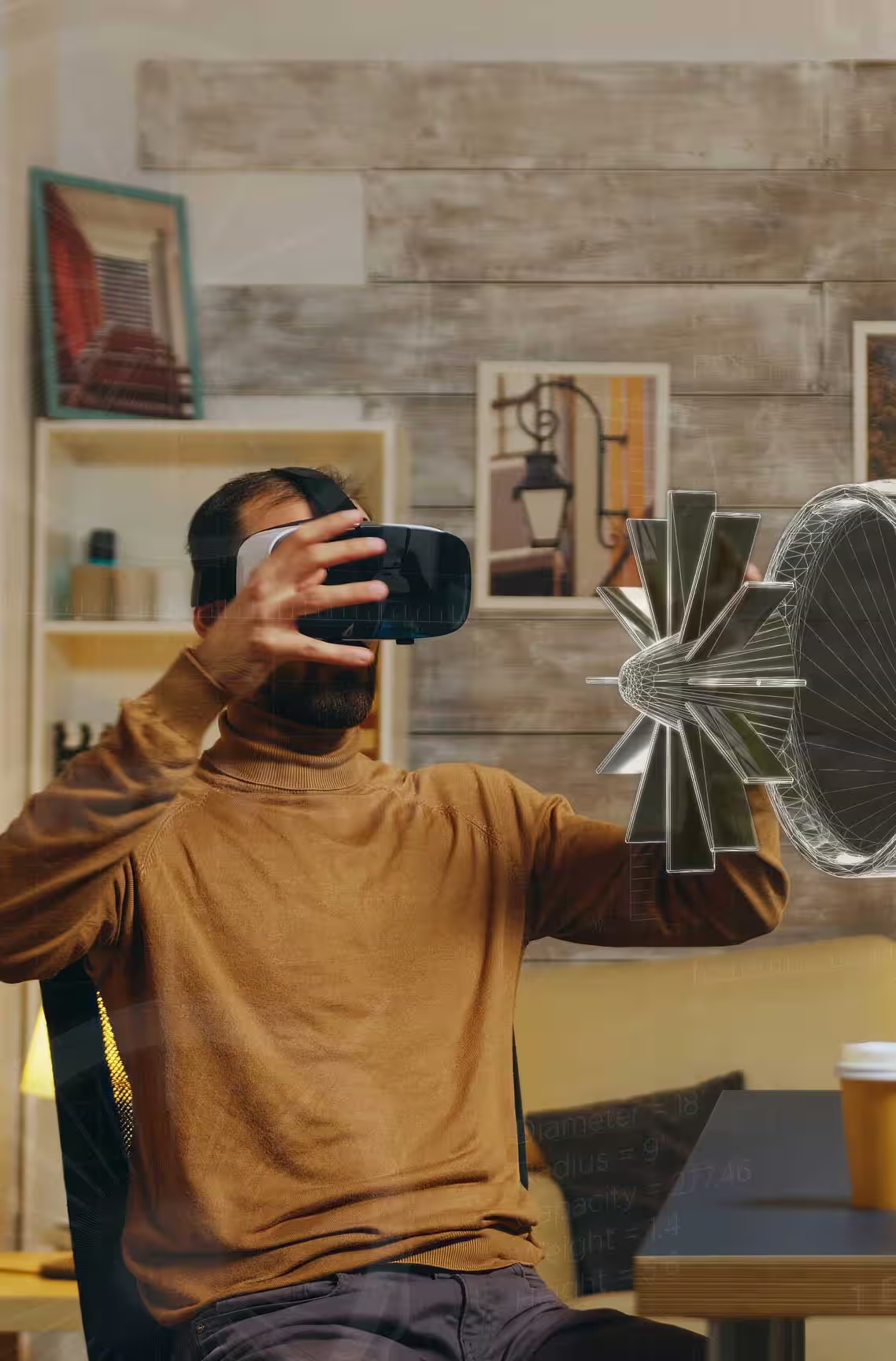
Digital prototyping tools drastically reduce the need for expensive tools in early development phases. Virtual reality makes it possible to ergonomically evaluate products long before the first physical prototype exists. Designers can walk around products in virtual spaces, look at them from all angles, and simulate usage scenarios. This speed is crucial in dynamic markets, where time-to-market is decisive for success or failure.
Companies that invest in modern prototyping infrastructure not only shorten their development times. They improve the quality of their end products through early testing and continuous optimization.
Biophilic design combines nature and technology
Nature has always been the best designer. Millions of years of evolution have produced structures that are both aesthetically fascinating and functionally optimal. In 2026, biophilic design continues to gain in importance, driven by technological possibilities that make it possible to translate natural principles into industrial products.
This development is made possible by advances in generative and parametric design. Algorithms that are inspired by growth processes in nature generate structures that human designers would never conceive of but work perfectly. Honeycomb structures for maximum strength with minimum weight Fractal patterns that optimally distribute loads. Flow optimizations based on schools of fish or bird wings.
Natural principles in modern product design:
- Organic design language: Curved lines and smooth transitions instead of hard edges create products that blend harmoniously into human habitats
- Biomimetic structures: Design principles taken from nature optimize weight, strength and resource efficiency
- Natural materials: wood, stone, cork and textile surfaces bring haptic quality and warmth to technical products
- Adaptive systems: Self-regulating mechanisms based on biological models create intelligent, responsive products
- Growth-oriented development: products that evolve, adapt, and learn with their users over time
Bio-design goes one step further and integrates living organisms or biological processes directly into product design. From self-healing materials to biotechnologically produced materials, there are completely new opportunities for sustainable product innovation. Leather that grows from mushroom mycelium without animals. dyes that bacteria produce. Packaging that is compostable because it consists of living matter.
The balance between efficiency and experimentation
In 2026, industrial design is faced with a tightrope walk. Economic uncertainty creates pressure for efficiency, risk minimization, and scalable systems. Comprehensible, human, comprehensible. But excessive caution poses a subtle risk: It leads to uninspired design, to products that work but don't move anyone. On missed opportunities for innovation.
Successful companies find a balance between the two poles. They use systematic processes and data-based decisions, but at the same time consciously create space for creative experimentation. Protected areas where failure is allowed. Time frames in which wild ideas can be tested. Agile development methods make it possible to minimize risks through early prototypes and iterative approaches without suppressing innovation.
Focusing on fewer but more well-thought-out product launches is becoming a strategic advantage. Instead of numerous variants, concentrated portfolios with a higher level of development depth are created. These products impress with sophisticated details, better quality and longer market relevance. They have a soul, a story, a right to exist beyond quarterly figures.
Design teams that combine systematic work with creative openness deliver outstanding results even under difficult conditions. The trick is to understand processes not as a restriction but as a basis for well-founded creativity.
Human-centered design as a success factor
There is always a person at the end. Someone who uses a product, works with it, depends on it. This simple truth remains the most important success factor in industrial design in 2026. Products that are based on real requirements instead of assumptions create real added value and are accepted on the market. Products that are based on projections and wishful thinking fail. So easy, so brutal.
Human-centered product design starts with thorough research. Interviews that go beyond superficial surveys. Observations in real contexts of use. Tests that provide honest feedback. Empathy mapping helps to empathize with different user groups and understand their actual needs. These findings are incorporated into the development process right from the start, not as a subsequent correction.
Inclusive design is of particular importance. Products must work for diverse user groups, regardless of age, physical abilities or previous technical experience. Universal Design creates solutions that can be used by as many people as possible without adjustments and at the same time do not exclude anyone. This is not only ethically necessary, but also economically wise: Inclusively designed products open up larger markets.
The continuous integration of user feedback over the entire development cycle prevents costly mistakes. Iterative testing and optimization ensures that final products actually deliver on the promises made in the concept phase.
Strategic recommendations for 2026
Successfully navigating the 2026 industrial design trends requires a strategic approach. Companies should systematically integrate AI tools into their development processes while maintaining the balance between automated analysis and human creativity. Investments in AI-supported design software pay off through accelerated processes and improved decision-making bases.
Sustainability must move from a side note to a core strategic issue. Dealing with the circular economy, material-efficient design and digital product passports at an early stage creates compliance security and opens up new business opportunities. Companies that establish sustainable product design as a differentiating feature are increasingly gaining value-conscious customers.
Modernizing prototyping infrastructure should be a priority. In-house 3D printing, digital simulation tools, and virtual reality testing enable faster, more cost-effective development cycles. These investments pay off through reduced time-to-market and better quality end products.
Consistent focus on real user needs remains particularly important. Systematic user research, early testing and iterative optimization prevent expensive mistakes. Design teams should work closely with production, sales, and customers to create holistic solutions.
Outlook: Design as a competitive advantage
Industrial design trends 2026 show a clear direction: Technology is becoming more human, products are becoming more sustainable and design processes are becoming more efficient. At the same time, appreciation for authenticity, craftsmanship and emotional connection is growing. Companies that translate these apparent contradictions into coherent strategies gain decisive market advantages.
Professional industrial design is no longer an aesthetic luxury. It is a direct driver economic success, a strategic tool for differentiation in saturated markets. The combination of innovative technologies, sustainable principles and user-oriented approaches creates products that are not only convincing today, but also remain relevant in the long term.
The coming months will show which companies are finding the balance between efficiency and innovation. Between systematic processes and creative freedom. Between technological brilliance and human warmth. Anyone who now invests in modern design processes, sustainable concepts and user-centered development is ideally positioned for the challenges of a dynamic market.
2026 will be a turning point that shows that excellent design is more than just beautiful surfaces. It is the strategic integration of technology, sustainability, and human experience to products that create real value. Products that move, inspire and stay.