Hannover Messe 2026: AI is everywhere - but what does that mean for Products?
Hannover Messe 2026 shows once again how much industry is changing. Artificial intelligence is omnipresent, but many solutions still look abstract and software-driven. It gets exciting where technology actually makes its way into the product. Three observations from our visit to the trade fair show what really matters.
When the Real Problem is not Considered
Right behind the entrance, a high-performance charging station from Delta catches the eye. Technologically impressive, powerful, cleanly designed.
At the same time, a practical question immediately arises:
What happens to open-access charging cables in everyday life?

In many regions - such as in the Ruhr region - cable thefts are a real problem. Charging points sometimes fail over a long period of time because the infrastructure is damaged. Up to now, this topic seems to have hardly been considered in the design of such systems.
This is a classic area of tension:
Technology works - but the context of use is not fully considered.
However, this is exactly what determines success, especially when it comes to infrastructure products.
When Design and Engineering work together perfectly
The stand of igus provides a counterexample. A new generation of high-speed energy chains for cleanroom applications was presented there. Particularly striking: a three-dimensional energy chain on a robot arm, which rotates around an axis and is automatically deposited on its own chain links.
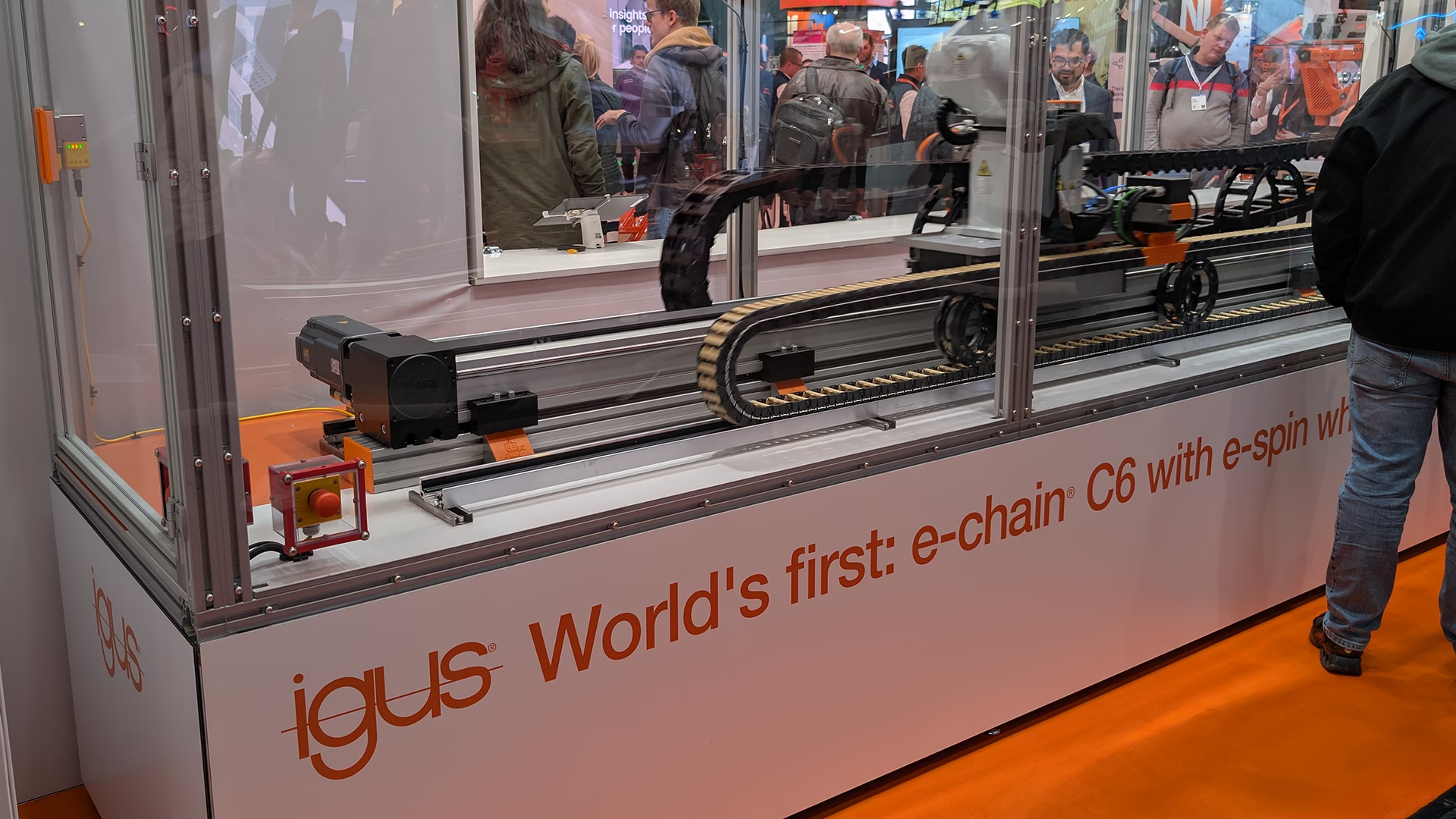
A separate management system is no longer necessary.
The result:
- fewer components
- reduced wear
- almost no abrasion
This is particularly important in a clean room.
It is remarkable that this solution is not only technically convincing, but is also clear and comprehensible in terms of design. The function is visible, the movement is logical, the system seems almost self-evident.
An example of how good industrial design reduces complexity - not increases it.
AI visible everywhere - but using a useful Example?
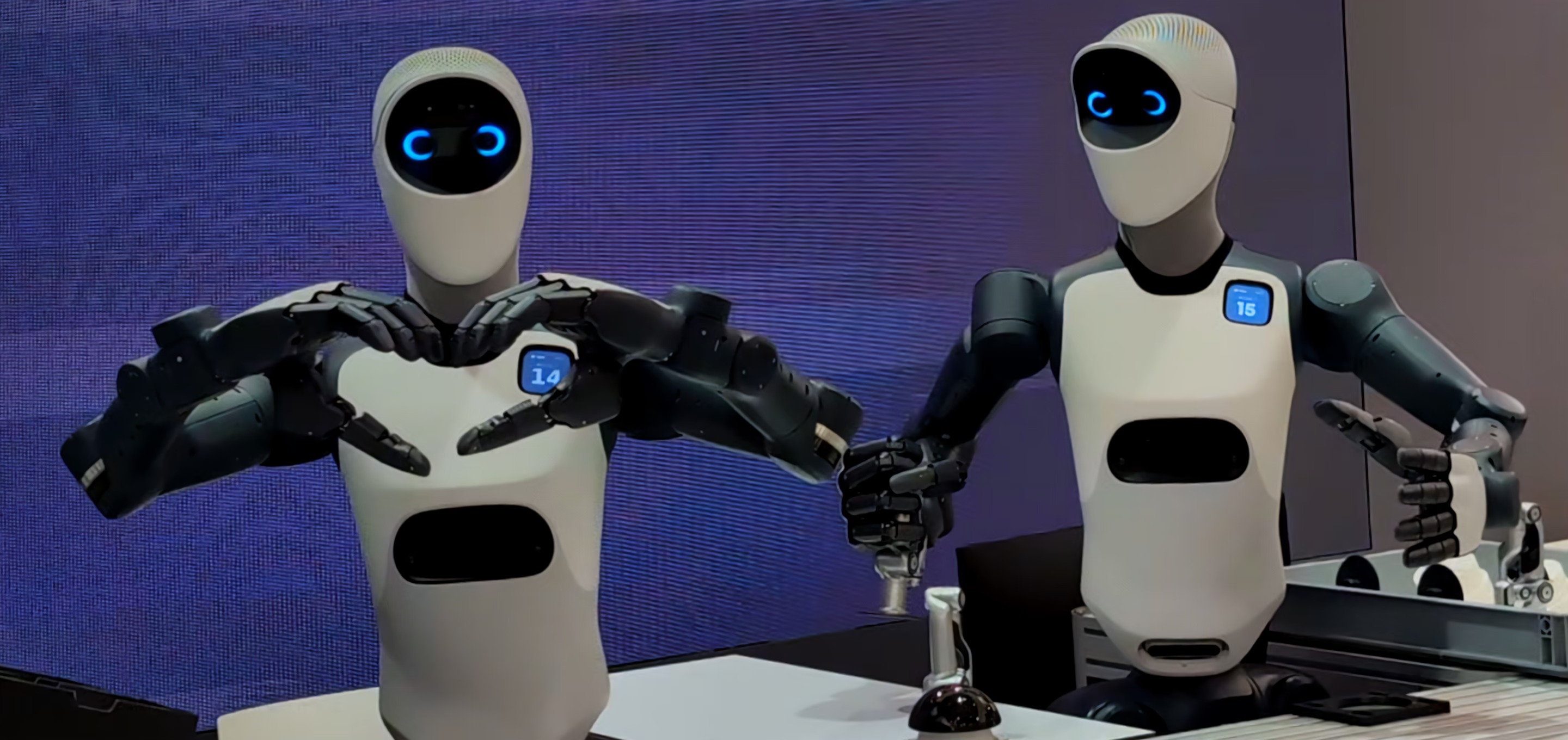
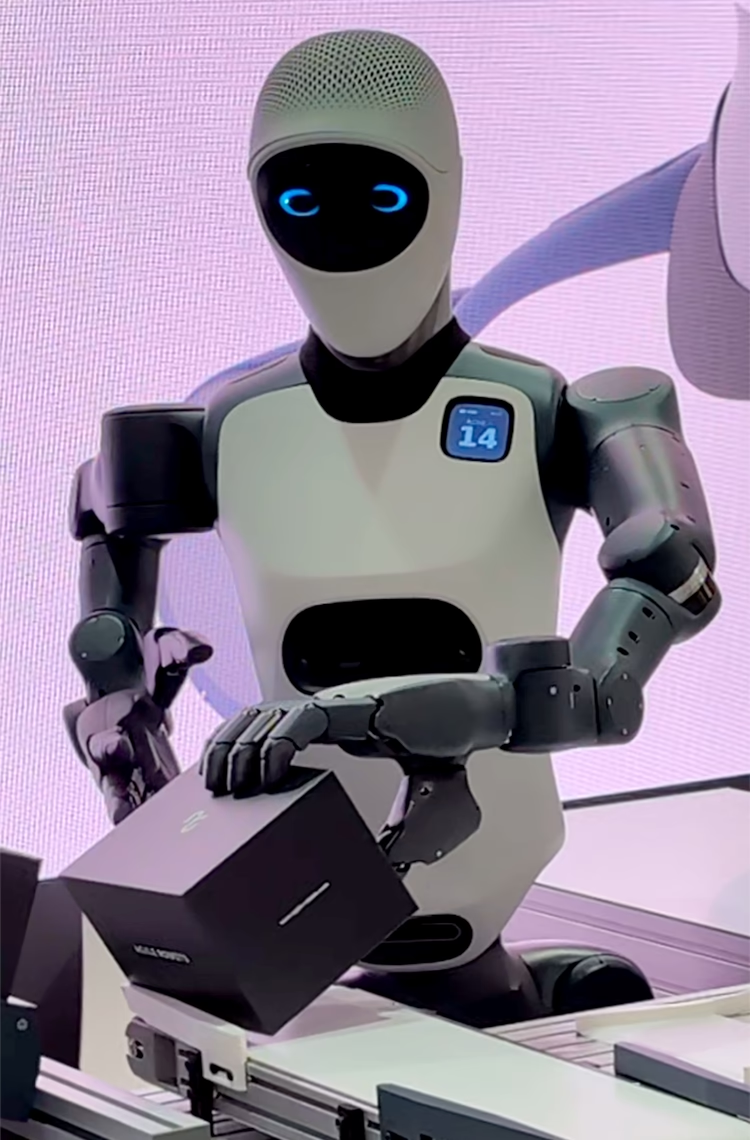
AI-based systems dominate at many stands. Particularly present: humanoid robots, for example at the German company Agile Robots.
The systems shown carry out assembly processes, learn independently and are clearly designed for industrial applications. The design is striking: disproportionately large hands, a clear focus on grasping and interaction.
However, the central question remains:
Is replicating humans really the best approach for industrial tasks?
Or is this also about visibility, acceptance and media attention?
In many cases, the form appears to be even more influenced by expectations than by the actual function. For the future, it will be decisive whether these systems evolve from the logic of the application - or from the logic of presentation.
Between Software and Reality
An overall impression of the trade fair:
Many solutions are heavily software-driven. Interfaces, data platforms and AI systems dominate the picture.
At the same time, it becomes clear that the decisive step is just beginning to be taken:
translating these technologies into real, usable products.
Where products are consistently thought of in practice - as with igus - real added value is created.
Where the usage context is not fully taken into account - as with the charging infrastructure - gaps arise.
Conclusion
Hannover Messe 2026 impressively demonstrates how fast technology is developing. Artificial intelligence has long been a reality in industry.
The real challenge, however, lies not in the technology itself, but in its application.
Products must not only be powerful, but also robust, understandable and suitable for everyday use.
Or in other words:
The future is not decided by the algorithm - but by the product.