
Industrial Design as a Growth Market: Why the Industry is Booming
Industrial design: far more than aesthetics. While many industries are struggling with economic headwinds and geopolitical uncertainty, the global industrial design market is showing remarkable resilience. According to current market data, the segment grew to around USD 50 billion in 2024 - and is expected to rise to over 75 billion by 2034. That corresponds to an average annual growth rate of 5.3 percent. So what's driving this growth?
Three Forces Pushing the Market Upward
1. AI Makes Design Faster - and Strategically More Valuable
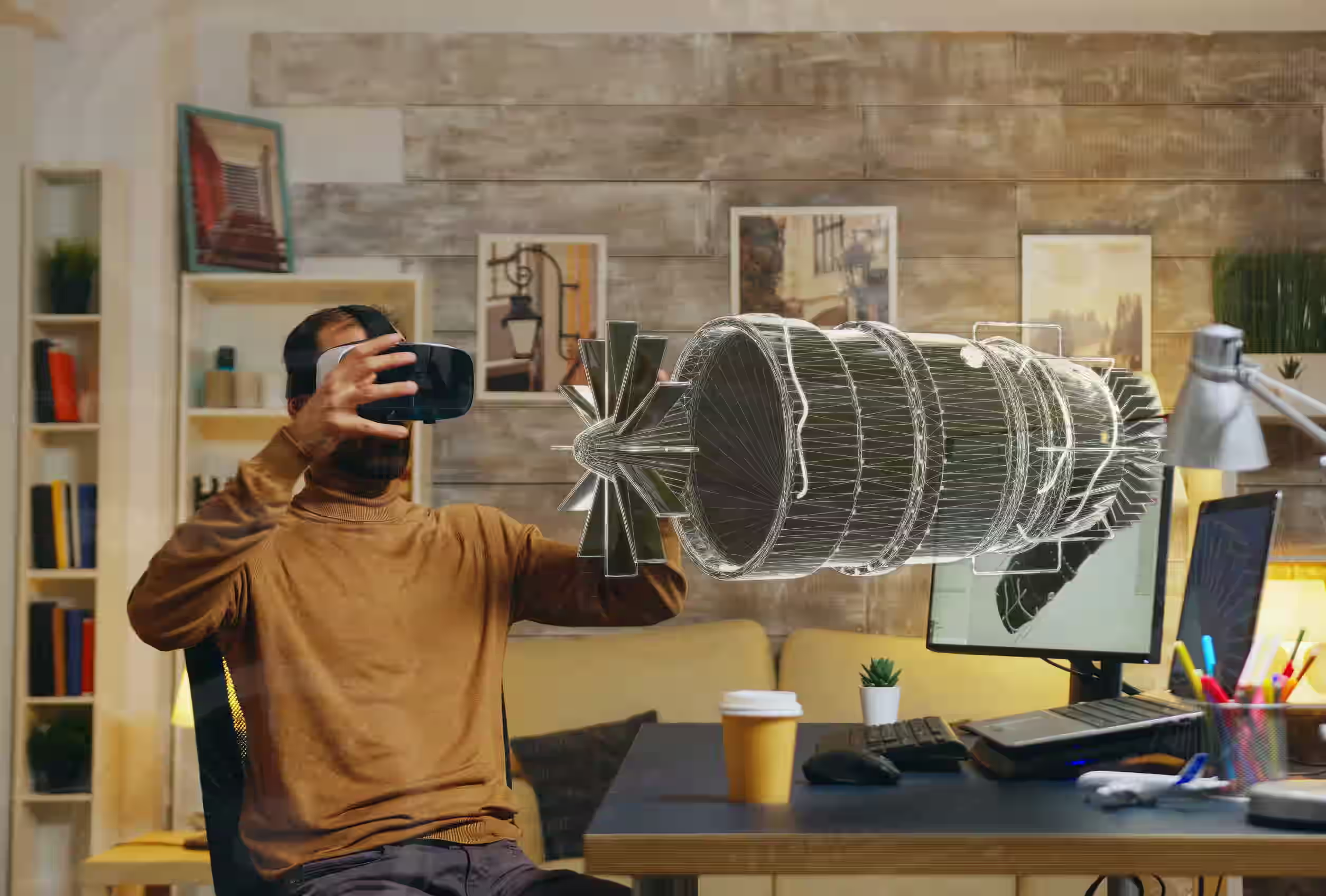
Artificial intelligence is fundamentally changing how products are made. What used to take weeks – concepting, variant development, feasibility checks - now happens in hours. AI-driven generative design processes independently propose engineering solutions, simulate load scenarios and identify optimization potential.
The result: design processes become more efficient, teams can develop more concepts in less time, and the quality of decision-making improves. The strategic value of industrial design within companies grows measurably as a result. Integrating design early and systematically into the development process reduces costly iterations in later stages – and gets products to market faster.
2. Sustainability Starts in the Design Process - Not in the Press Release
The EU Ecodesign Regulation and the digital product passport have turned sustainability from a differentiator into a regulatory requirement. Products must be repairable, disassemblable and recyclable. Ignoring this risks not just compliance issues – it means increasingly losing value-conscious customers and investors.
This creates demand: companies need designers who factor circular economy principles in from the start. Sustainable product design takes many forms – as two of our own projects demonstrate.
Sustainability Through Waste Reduction: BlueLavage
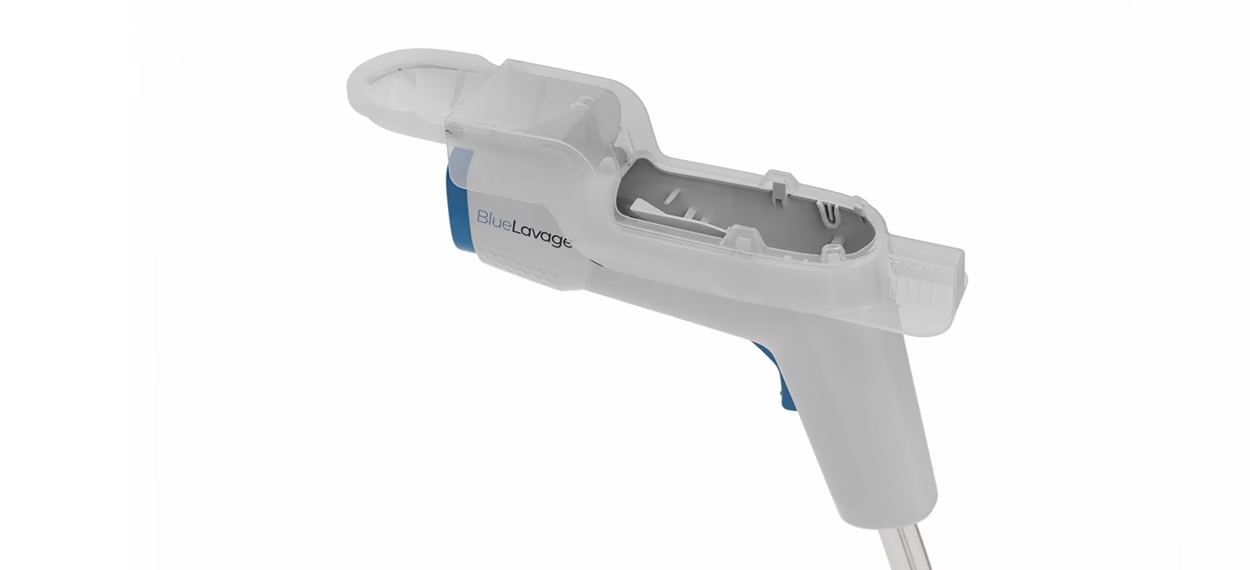
In Germany alone, around 434,000 surgical suction and irrigation systems are used in operating rooms every year - and disposed of immediately afterwards. That means 334 tonnes of plastic, 2.6 million batteries and 434,000 motors per year. For a single product.
Together with UTK Solutions, we developed the BlueLavage suction and irrigation pistol. The key design idea: a consistent separation between a single-use handpiece and a reusable drive unit. The motor can be reused up to 150 times - without sterilisation. The result: 50 percent less medical waste, specifically 53 tonnes less e-waste and 164 tonnes less plastic per year in Germany. Awarded the iF Design Award and the Effizienzpreis NRW.
Sustainability Through Modularity: iTD Rollstand Neo
A different approach, the same principle: produce fewer variants – but one product that can be adapted endlessly.
For iTD, one of the world's largest manufacturers of medical equipment trolleys, we developed the Rollstand Neo. A single modular system, configurable via slot attachments for ECG, ultrasound, endoscopy, ventilation and more – instead of manufacturing a separate product variant for every application. Fewer parts, less inventory, longer product lifecycles. That's sustainability too - and it earned the iF Design Award 2024.
What both projects show: sustainability in industrial design isn't a question of good intentions. It's a question of the right design decisions – and those need to be built into the process from the start, not bolted on afterwards.

3. IoT and Connected Products Are Creating a New Design Category
Smart, connected devices are now a fixture of industrial life. Sensors, interfaces, connectivity - all of this needs to be physically integrated into products without compromising ergonomics, aesthetics or usability. That's a genuinely design-led challenge that requires specialist knowledge.
For industrial design agencies, this means: the complexity of tasks is growing, and so is clients' willingness to invest. Designers today take on responsibilities in information architecture, UX and systems integration - well beyond classic form-giving.
What This Means for Manufacturing Companies
The growing market signals one thing clearly: industrial design is no longer seen by companies as a cost factor, but as a strategic investment. According to the Design Council, companies that consistently invest in design generate more than £20 in return for every £1 spent.
In practical terms, for companies that want to stay competitive:
- Involve design earlier: At the start of the development process - not as a final polish
- Use AI tools systematically: Not as a replacement for creative expertise, but as an accelerator
- Treat sustainability as business strategy: Circular economy opens up new business models, not just compliance security
- Seek specialisation: The complexity of connected products requires design partners with genuine systems expertise - take a look at our Services
A Market in Structural Transition – and That's a Good Thing
The growth of the industrial design market is no coincidence. It reflects a fundamental shift: products have become more complex, user expectations more demanding, regulatory frameworks stricter. Companies are recognising that good design isn't a luxury - it's the difference between a product that survives in the market and one that doesn't.
Sounds like your product? Let's have a Coffee Talk.