Where Conventional Drones hit their Limits
Anyone using drones for surveillance and reconnaissance missions quickly runs into a fundamental physical problem with conventional quadcopters: the motors have to spend almost all their energy just keeping the aircraft airborne, leaving little left over for actual forward propulsion. Typical flight times run 15 to 25 minutes, which sharply limits operational range. On top of that come wind sensitivity, a distinctive acoustic signature from the rotors, and limited payload capacity for sensors and optics.
Fixed-wing aircraft solve these problems efficiently, but they need runways or catapult launch systems and can't hover - which is often a disqualifying factor in tactical use. The client was therefore looking for a platform that combined the best of both worlds: the VTOL capability and hover flight of a quadcopter, paired with the range and aerodynamic efficiency of a fixed-wing aircraft.
Designing Aerodynamics as a complete System
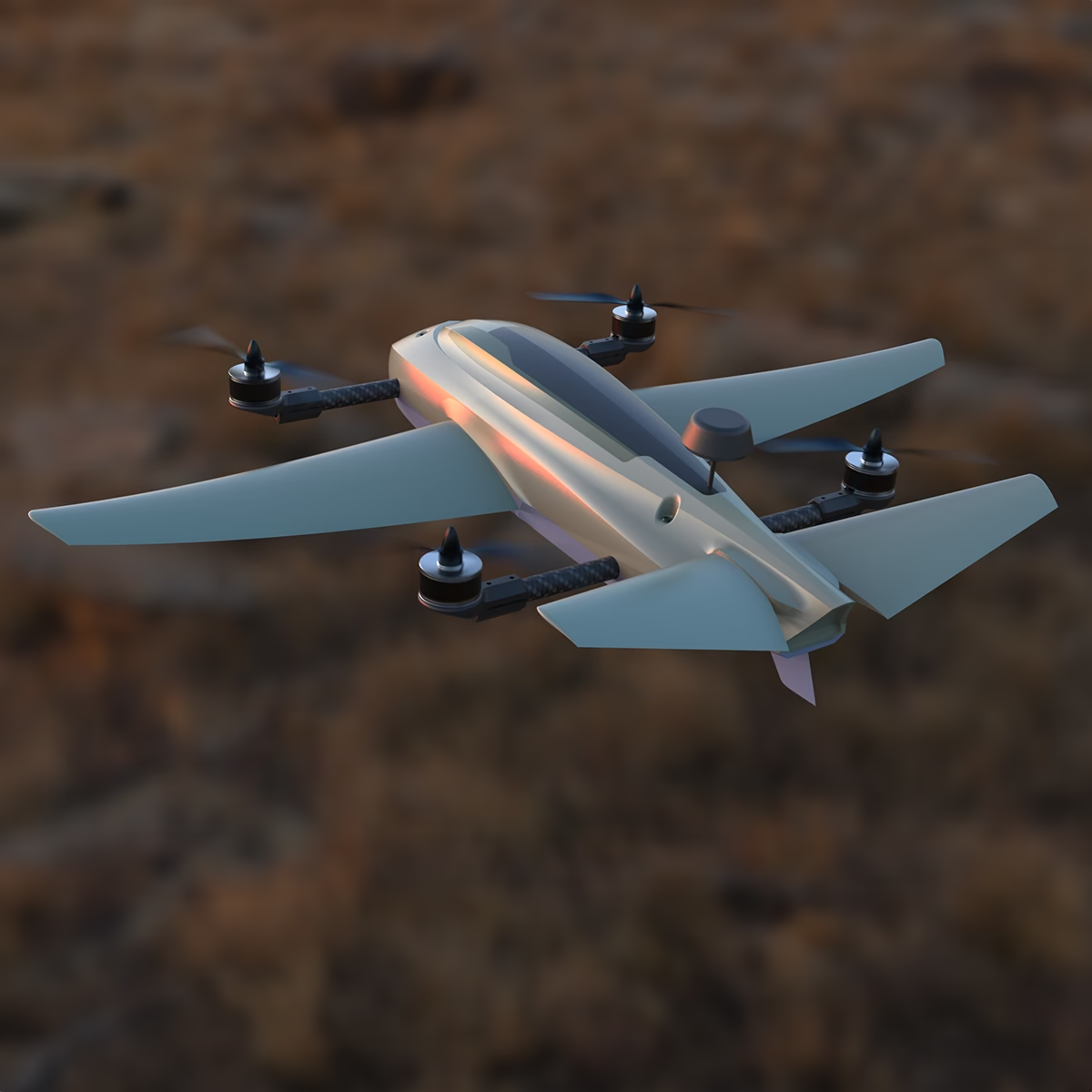
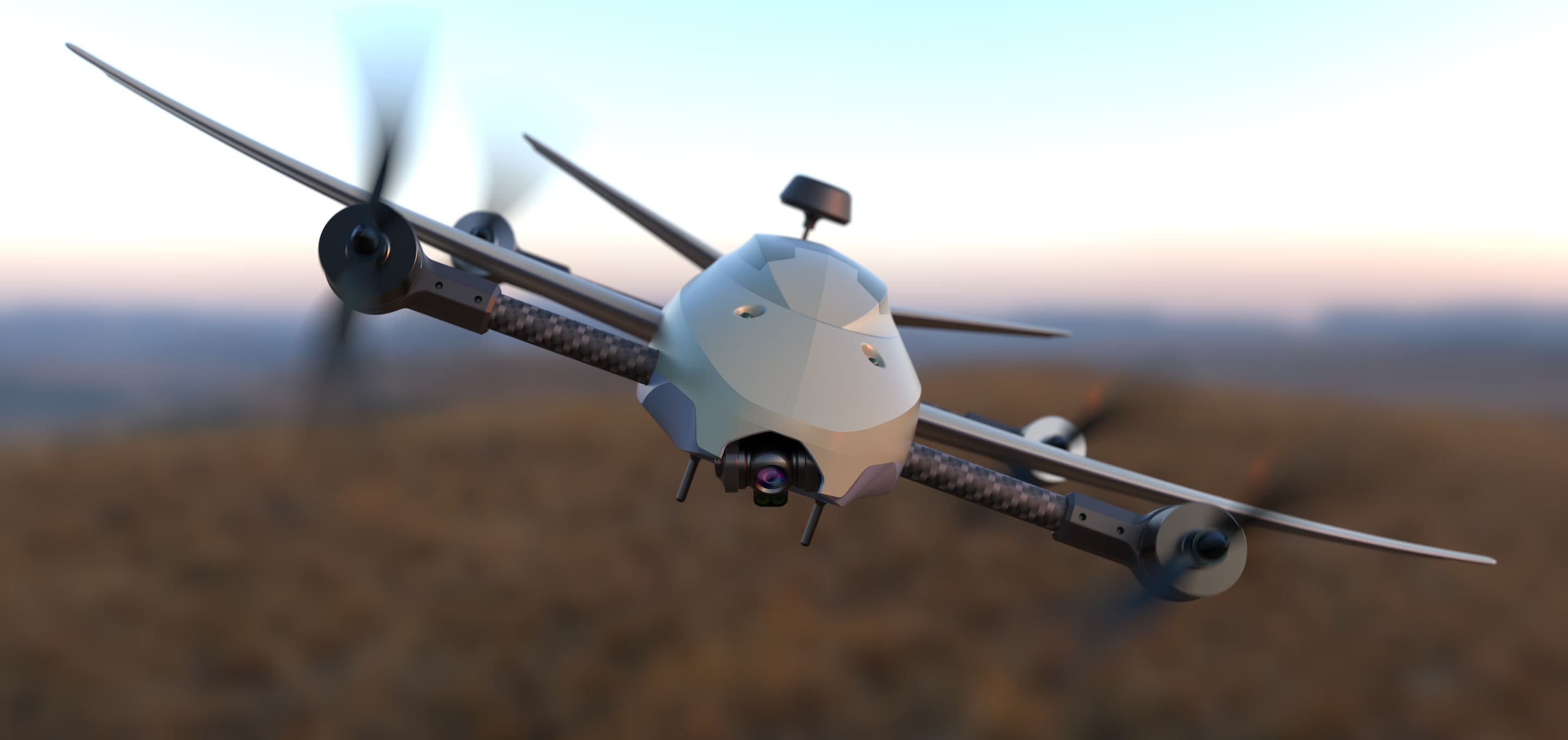
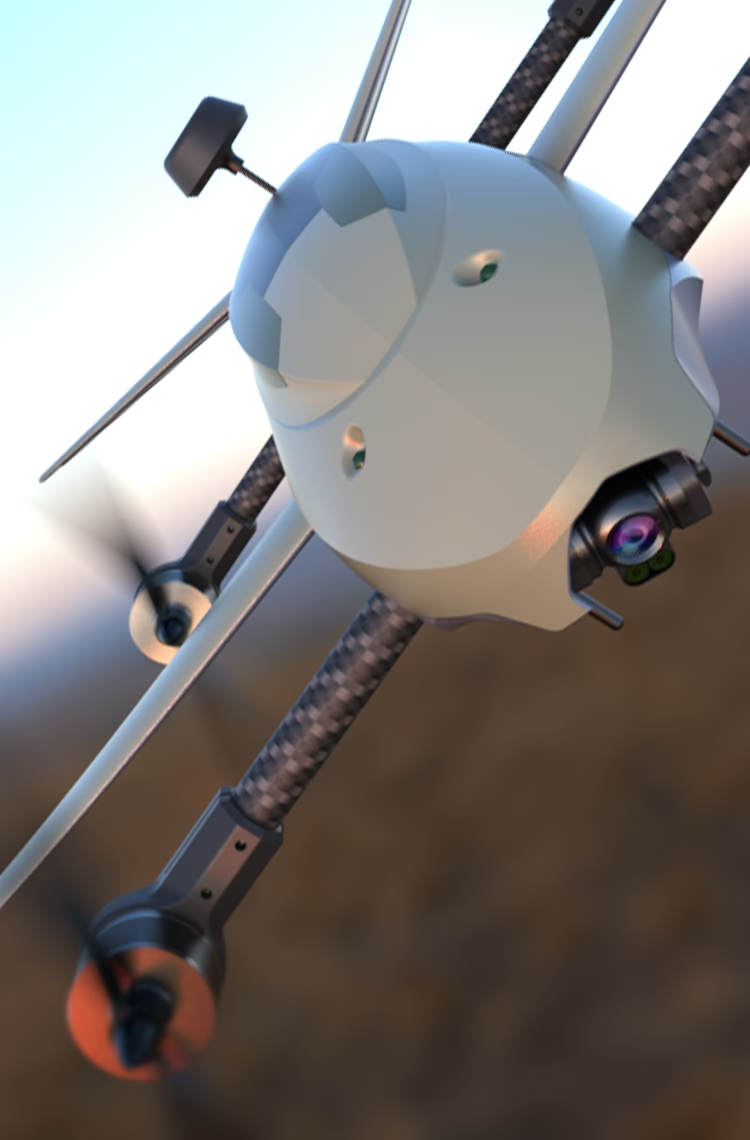
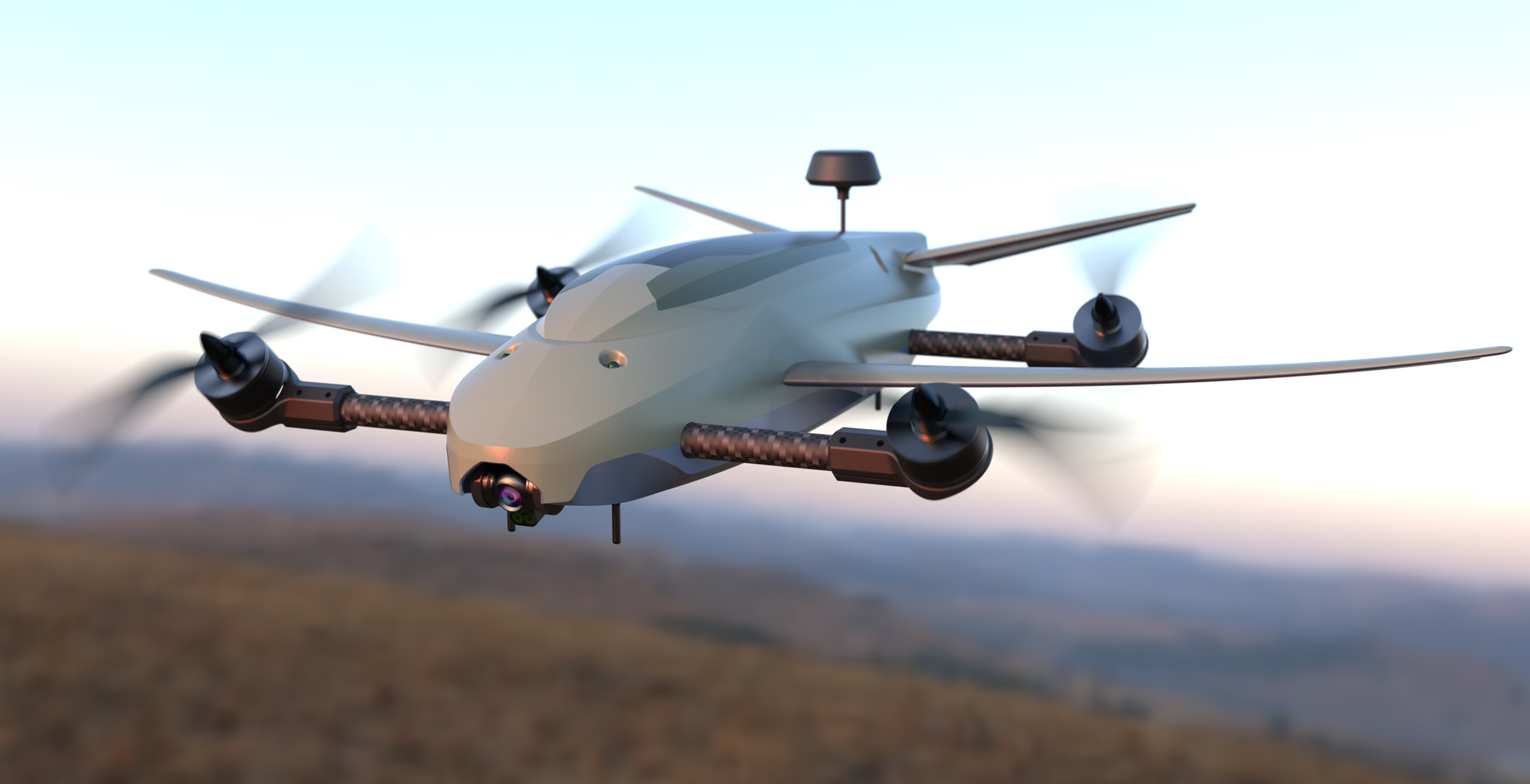
The heart of the project was developing a wing concept that integrates seamlessly into the quadcopter architecture. Projekter worked closely with the client to design a canard-like configuration with two wing pairs: a forward mid-wing generates roughly 60 percent of the aerodynamic lift, while a rear tail wing above the rear rotor pair provides the remaining 40 percent. This layout - familiar from fighter aircraft design - creates a defined aerodynamic instability that noticeably increases the aircraft's agility.
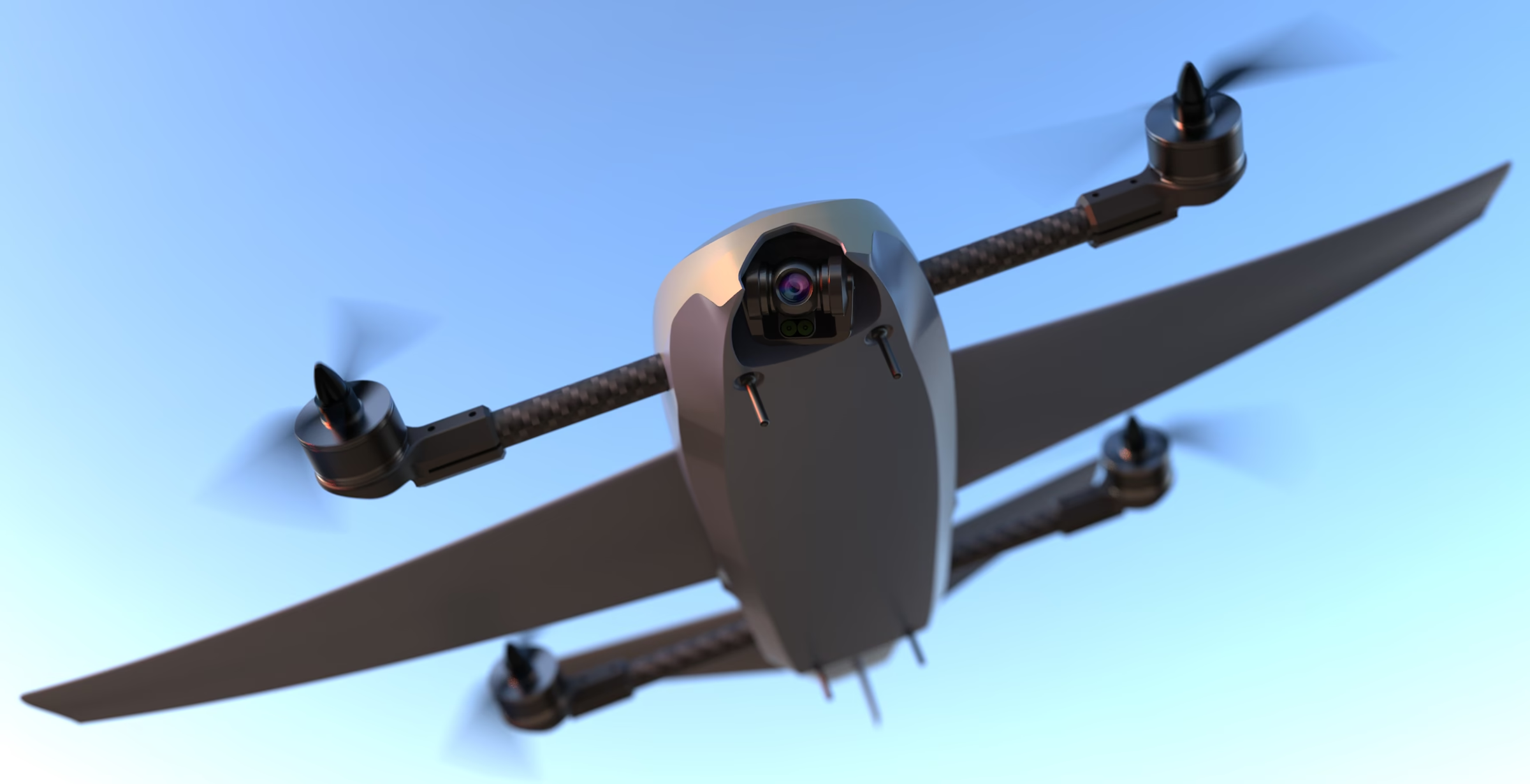
For the airfoil geometry, the team chose the Eppler E214, a profile specifically developed for low Reynolds numbers that delivers high lift and low drag - proven especially effective for small UAVs operating in tactical speed ranges. The wings had to be engineered so they wouldn't interfere with the pivoting rotor axes while still extending far enough to reach the propeller tips - a geometric challenge Projekter resolved with the client over several design iterations.
Lightweight Construction down to the last Detail
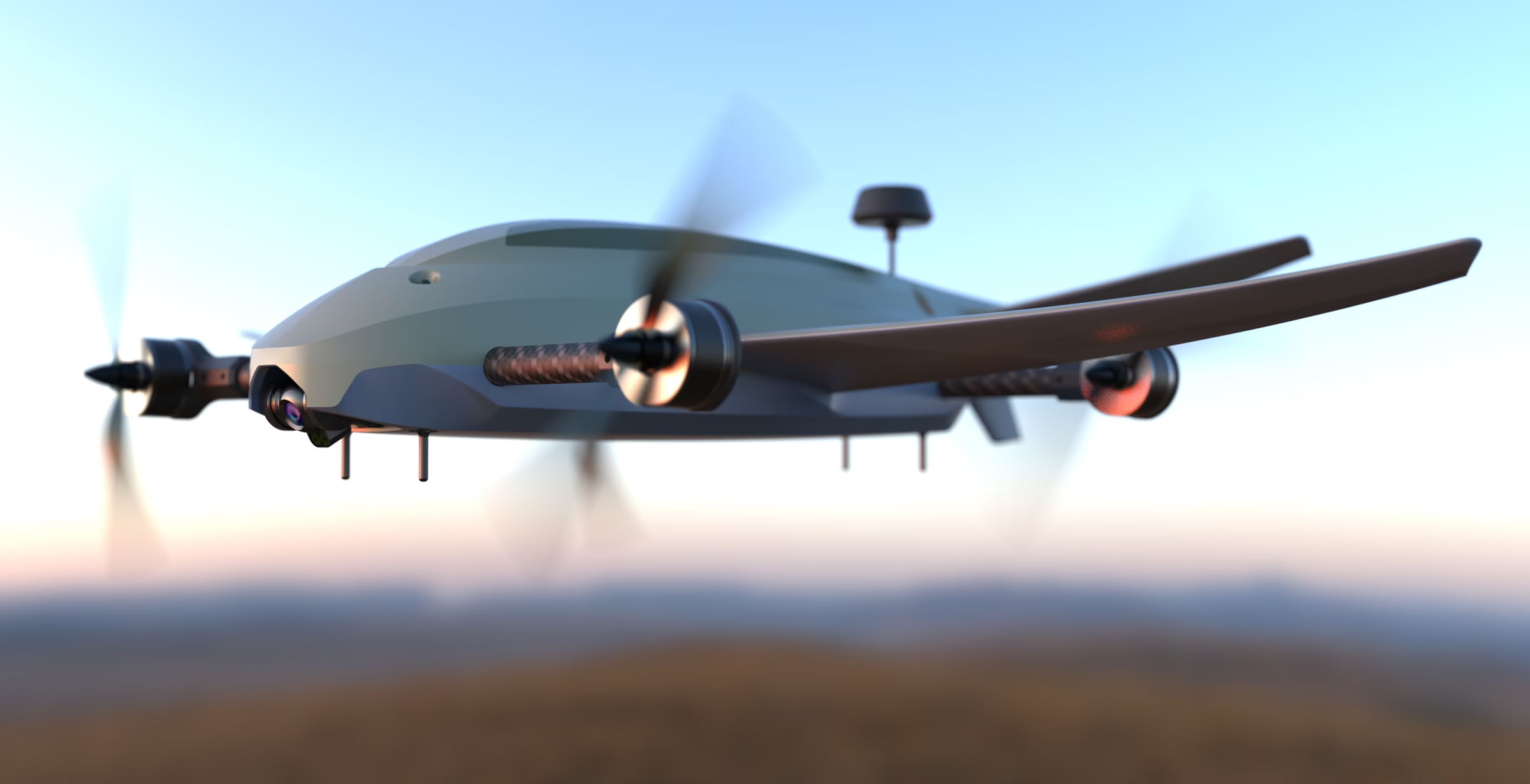
Every gram saved extends mission duration - this principle ran through every construction decision. The internal structure is built on a sandwich layup of carbon plates, onto which all electronics, control systems, and mechanics are mounted directly. The pivoting rotor axes are also made of carbon and allow a swivel range of up to 50 degrees. The aerodynamic outer shell consists of a carbon-Kevlar laminate at the thinnest possible layer thickness: carbon provides stiffness, aramid provides impact resistance against field wear.
The gimbal-mounted camera in the nose enables stably guided footage even during movement and wind exposure. A longitudinally sliding battery compensates for different camera weights and keeps the center of gravity constant — a solution that's as simple as it is effective from a DFMA standpoint. For field deployment, the housing was designed so the central section can be removed from above without tools, significantly simplifying battery swaps and maintenance under operational conditions.
Result: Efficiency that grows with Speed
At low speeds, the Endura Scout behaves much like a conventional quadcopter. But as speed increases, the wings increasingly take over weight compensation, relieving the motors. The thrust vector shifts progressively toward pure forward propulsion - an effect that translates directly into range and endurance, without sacrificing VTOL or hover capability.
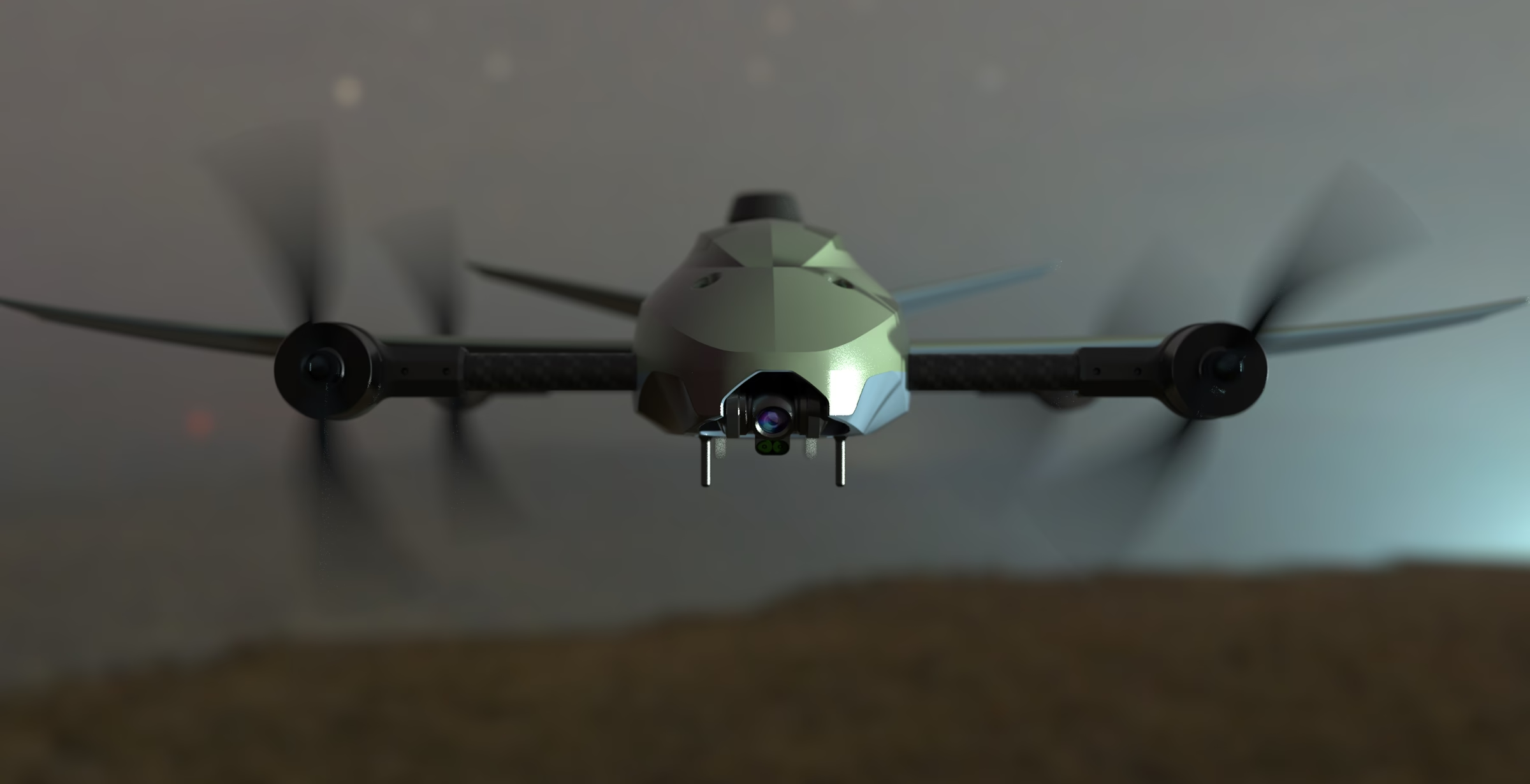
The result is a platform that addresses the classic weaknesses of conventional quadcopters in reconnaissance use - limited flight time, high energy consumption, wind sensitivity - through a consistent, integrated aerodynamic concept. Photorealistic CGI renderings in camouflage livery, along with a product animation, visualize the flight concept and system architecture for sales and client presentations.
Learnings
This project showed us how much potential lies in combining quadcopter agility with fixed-wing aerodynamics - and how early these dimensions need to be considered together in the design process. Aerodynamic requirements can't be layered onto an existing design after the fact; they shape geometry, center of gravity, manufacturing joints, and material choice from the ground up.
At the same time, the project confirmed that lightweight construction isn't just a question of materials - it's a design mindset: consistently questioning every layer, every joint, every assembly interface for weight and function. The close coordination between aerodynamic design, construction, and DFMA was the decisive factor in making the Endura Scout not just aerodynamically sound, but also manufacturable and field-tested.