When Darkness, Gloves, and Wetness Become a Design Requirement
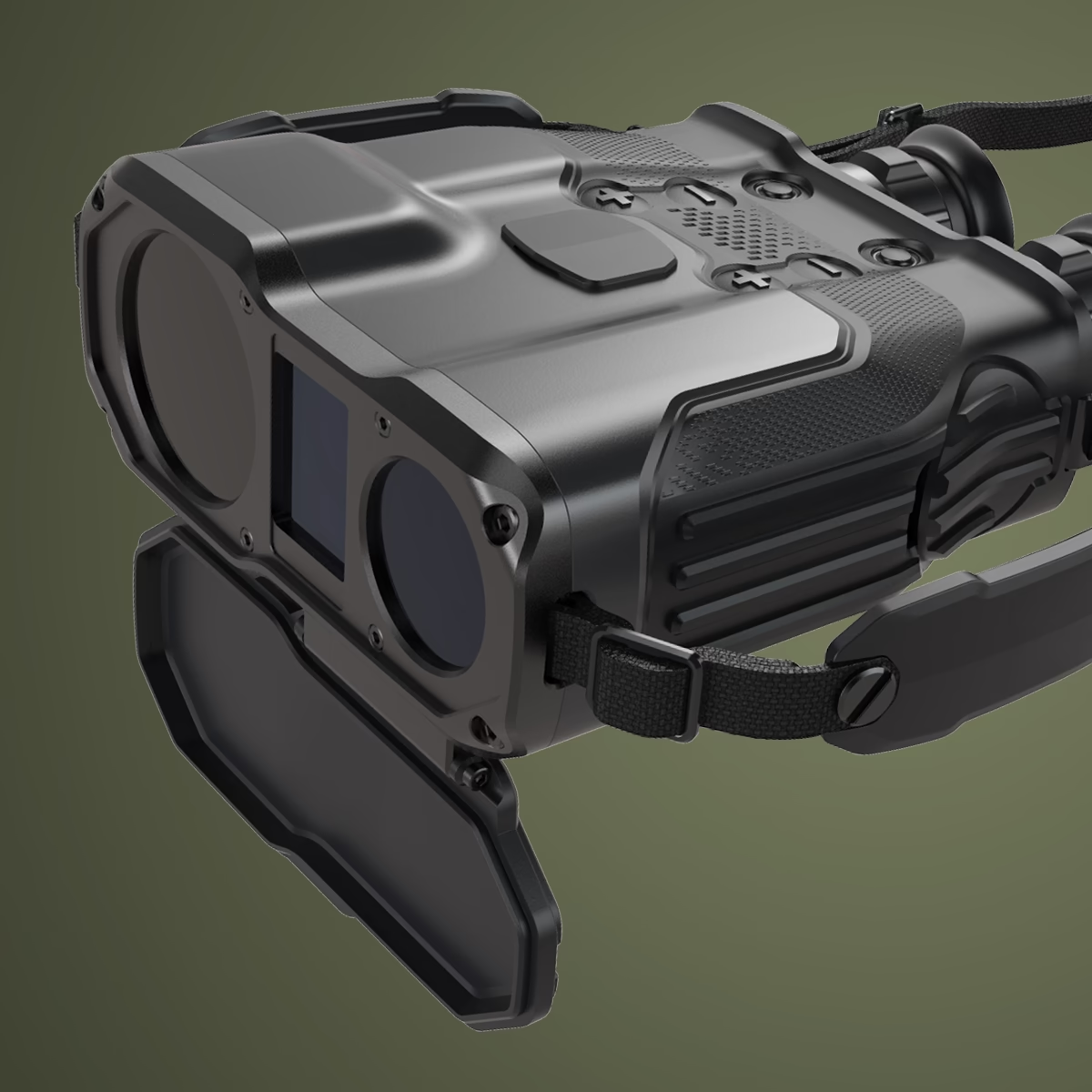
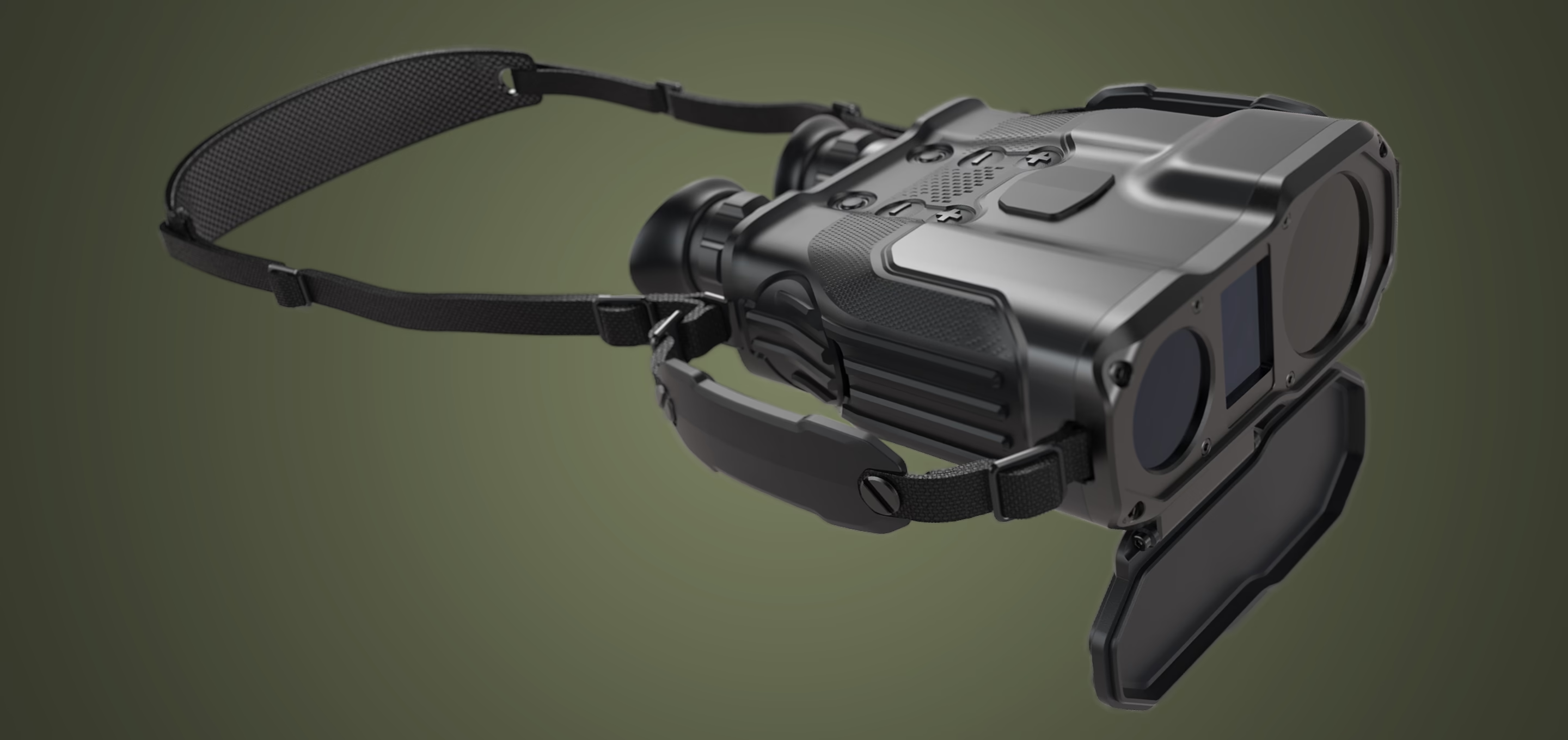
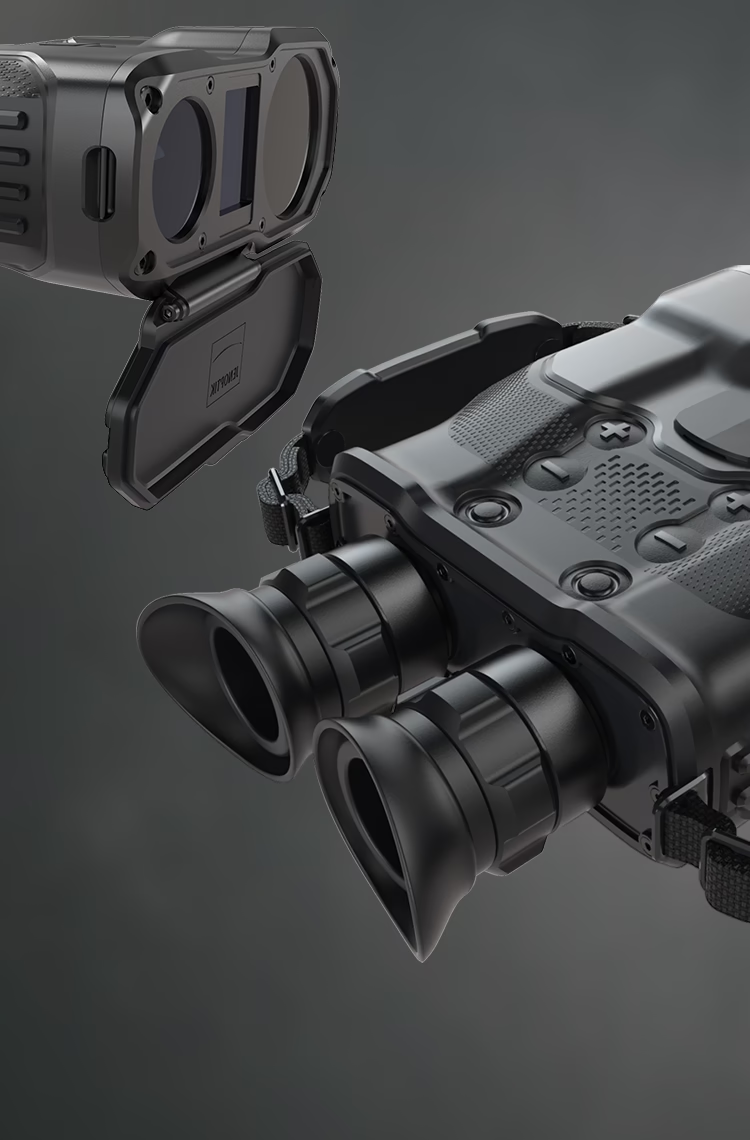
Digital binoculars that combine white light and infrared, integrate a laser rangefinder and are IP67 certified - this is already a technically demanding task. PEGASUS should also be able to operate blindly: with gloves, in the dark, under stress, without instruction.
What sounds like a defense product at first was actually intended for a broad civilian target group. Projekter Industrial Design developed PEGASUS together with the electronics partner b1 Engineering Solutions on behalf of a major German high-tech manufacturer - for mountain rescue, fire and customs, as well as for foresters, seafarers and passionate private users in hunting, nautical and nature conservation. What all these users have in common is not the situation but the expectation - a device that is reliable, precise and also radiates this claim.
This presented the design with a task that goes far beyond design: to develop a control that works blindly - without overloading the housing with control elements. And at the same time design a housing structure that meets IP 65, IP 67 and IK 06 without becoming disproportionately expensive to manufacture.
Three Directions, Many Models, find a Design Language
In phase 1, Projekter developed three fully developed design directions - not variant sketches, but coherent design approaches, each with its own design language, character and communication with the user.
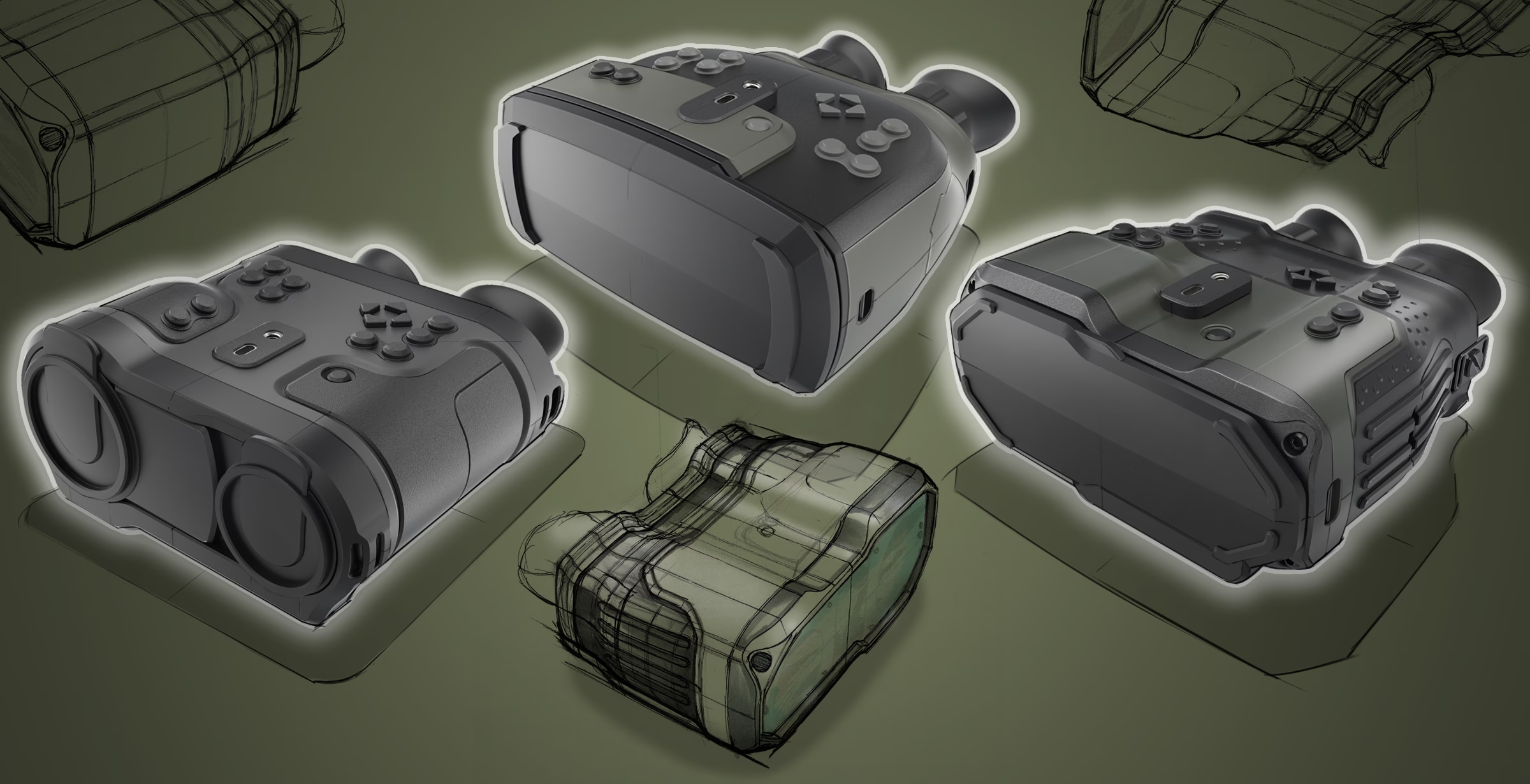
DESIGN 1 — extrude: The main body is a straight extruded cylinder with an oblong hole section. Large radii act as a design tool and give the device a calm, clear silhouette. The grip area stands out from the functional area thanks to generous beads and textured rubber coating - both visually and haptically. The device communicates: precisely, technically, reliably. No hassle, no distractions.
DESIGN 2 — Tense: Tense surfaces interacting with concave and convex create a calm, ordered shape with latent energy. Chamfers break the surfaces and define clear regions: The front remains angular - it signals function, technology, performance. The rear is getting soft - it signals that you can access this. As a trend-setting design tool, the U-shape element runs through the entire form and gives the product a visual logic that is accessible to the user without having to be explained.
DESIGN 3 — tough: Complex form transitions, lots of details, a tool-like character. Formed projections offer the user natural grip without glued rubber pads. Visible screw connections are not a constructive compromise, but a deliberate design element: They tell the user “I am stable. I'm tight. I'm serviceable.” Protruding rubber bumpers protect the case and what hits the device when dropped. The design language is reminiscent of high-performance tools - expertise that you see before you pick up the device.
All three directions were developed not only as CAD data and renderings. Projekter Industrial Design produced numerous physical pre-models and dedicated ergonomic models - tangible objects to touch, hold, test. The size is correct, the weight is simulated, the switch position is real. This is because a device that has to be operated with gloves does not work according to assumptions. It must prove itself - in the hand, not on screen.
The question of how the thumb naturally falls off when worn, how far the fingers can safely find the LRF button in the dark, whether the eyepieces fit instinctively when put on - these are not questions of detail. These are key issues. And they can only be answered with models.
Operation as an Independent Design Discipline
In parallel with the design, Projekter developed three fully developed operating concepts. That may sound like detailed work - but it's strategic. Because a product with this level of complexity can function in fundamentally different ways. Which concept is chosen determines not only the user experience, but also the number of components, assembly costs and service costs over the entire product life cycle.
Operating concept 1 — switch-oriented: Each function has a dedicated switch. Power via slide switch, LRF via thumb button right, IR/VIS switching via toggle switch, zoom, menu, snapshot - each button has exactly one task. The logic is clear: maximum intuitiveness, even without instruction, even in the dark, even with gloves on. The price: more components, more housing breakages, more sealing points.
Operating concept 2 — switching: Fewer switches, but context-dependent configuration. A switch on the left hand separates between optical functions and software functions. This significantly reduces the number of control elements - the housing remains cleaner, the sealing level becomes simpler. The user needs a bit more mental model, but gains a more compact, tidy device.
Operating concept 3 — app integration: Configuration functions migrate to a smartphone. The connection is via WiFi, the device itself remains reduced to the operational minimum: power, LRF, switch, focus wheel. What is not needed in the field is not on the device. This radically reduces complexity - and moves it to an app interface that is easier to update and localize. Attractive for professional users with a fixed workflow; for spontaneous deployment situations, a question of acceptance.
All three concepts were consistently developed on the basis of the same housing geometry. This was not a coincidence, but a method: This is the only way to reduce the decision between concepts to the actual question - which operating philosophy suits the user and the context of use? - without differences of form distorting the verdict.
A Study that Shows what Integrated Product Thinking Means
PEGASUS was not mass-produced. The study remained study. And yet - or precisely because of this - it is a clear example of what Projekter Industrial Design means by industrial design: not shaping following construction, but thinking simultaneously in all relevant dimensions from the very beginning.
The housing structure was not subsequently sealed. From the outset, it was designed as an IP-compatible system: a covered pot molder as the main body, a front panel as a mounting plate, flat shape separation with sealing elements, a strategically thought-out interior design. Each of these decisions has consequences for assembly time, error rate and serviceability - and was already considered in phase 1, not corrected in phase 3.
The three design directions not only give the client aesthetic options - they make different positioning strategies tangible.
Extrude focuses on a clear, calm form: maximally universal, without polarizing.
Tense combines technical precision with understated elegance: the device for demanding users who want to see quality without noise.
Tough communicates tool character and robustness: the device for those who need it in daily use.
Which direction you follow in the end is not purely a design decision - it is an answer to the question of who you want to address on the shelf and what the product should tell about your brand.
What remains: proof that good industrial design is much more than a beautiful rendering. It is the structured thinking of a product - from the user looking for a switch at night with gloves on to the sealing level, which determines reliability in wind and weather while keeping an eye on manufacturing costs.
That is exactly what drives us on projects like PEGASUS. Complexity is not a burden - it is the real appeal.
The central learning: Operation is not a downstream UX issue, but a design decision with tangible consequences for design, production and costs. Anyone who develops and physically tests three operating concepts in parallel makes a well-founded decision in the end - not a gut decision. And anyone who already thinks the housing structure is IP-compliant in phase 1 saves expensive corrections in phase 3.