


More Than Aesthetics: What Separates Successful Products from Failed Ones
Every product that succeeds in today's market has one thing in common: It wasn't just developed – it was designed. But what exactly does product design mean? And why does good product design so fundamentally determine whether a product resonates with buyers or gathers dust on the shelf?
This article explains what product design really means, which disciplines are involved and why it's far more than the question of how something looks.
What is Product Design? The Definition
Product design is the systematic creation of physical products with the goal of optimally balancing function, aesthetics, and user experience. It encompasses the entire process from the initial idea through concept development to production-ready design. Leading design institutions define design as a strategic factor that makes innovations visible and economically effective.
Product design goes far beyond pure "styling." It's a strategic discipline that considers technical feasibility, user requirements, manufacturing processes, and brand positioning from the very beginning.
A more precise definition reads:
Product design is the art of solving a problem in a way that makes the solution self-evident for the user – and economically viable for the manufacturer.
Product Design vs. Industrial Design: What's the Difference?
The terms are often used synonymously, but differ in their origins and focus.
Industrial design is the more classical term, historically referring to the serial mass production of industrial goods – tools, machines, household appliances, vehicles. The focus is on functionality, manufacturability, and the interaction between humans and technology.
Product design is the more modern, slightly broader term. It includes the design of all physical products, but places greater emphasis on the user perspective and the economic impact of design.
In practice, both disciplines are closely intertwined – especially in B2B environments, where products must be both industrially manufactured and used by real people. For a detailed comparison of both terms, see our article Industrial Design vs. Product Design: What's the Difference?.
The 4 Dimensions of Good Product Design
What makes a product truly well-designed? In our work with manufacturers from medical technology, power tools, sports equipment, and many other industries, we've identified four dimensions that determine success or failure:
1. Function - The Product must do its Job
This sounds self-evident, but it isn't. Many products work perfectly on a technical level, yet fail because they don't perform in real-world usage contexts. An ergonomically poor grip, an illogical operating sequence, a housing too heavy for construction site use – these are design problems, not engineering problems.
Good product design therefore always begins with a question: How, when, and under what conditions will this product actually be used?
2. Aesthetics - The Product must inspire Trust
Aesthetics isn't luxury, it's communication. Before a user picks up a product, they've already formed expectations – based solely on appearance. Form, proportion, material impression, and color signaling: Is this product robust? Precise? High-quality?
Particularly in B2B sectors, manufacturers regularly underestimate this effect. Yet our projects consistently show: Two technically identical products, designed differently, are perceived by buyers as fundamentally different in quality. The Design Council UK demonstrates in its research that companies with strong design focus significantly outperform their competitors – in both revenue and market value.
3. Manufacturability - The Product must be producible
This is where professional product design separates from design studios that only handle surfaces. A design that can't be efficiently manufactured isn't good design – no matter how beautiful it looks.
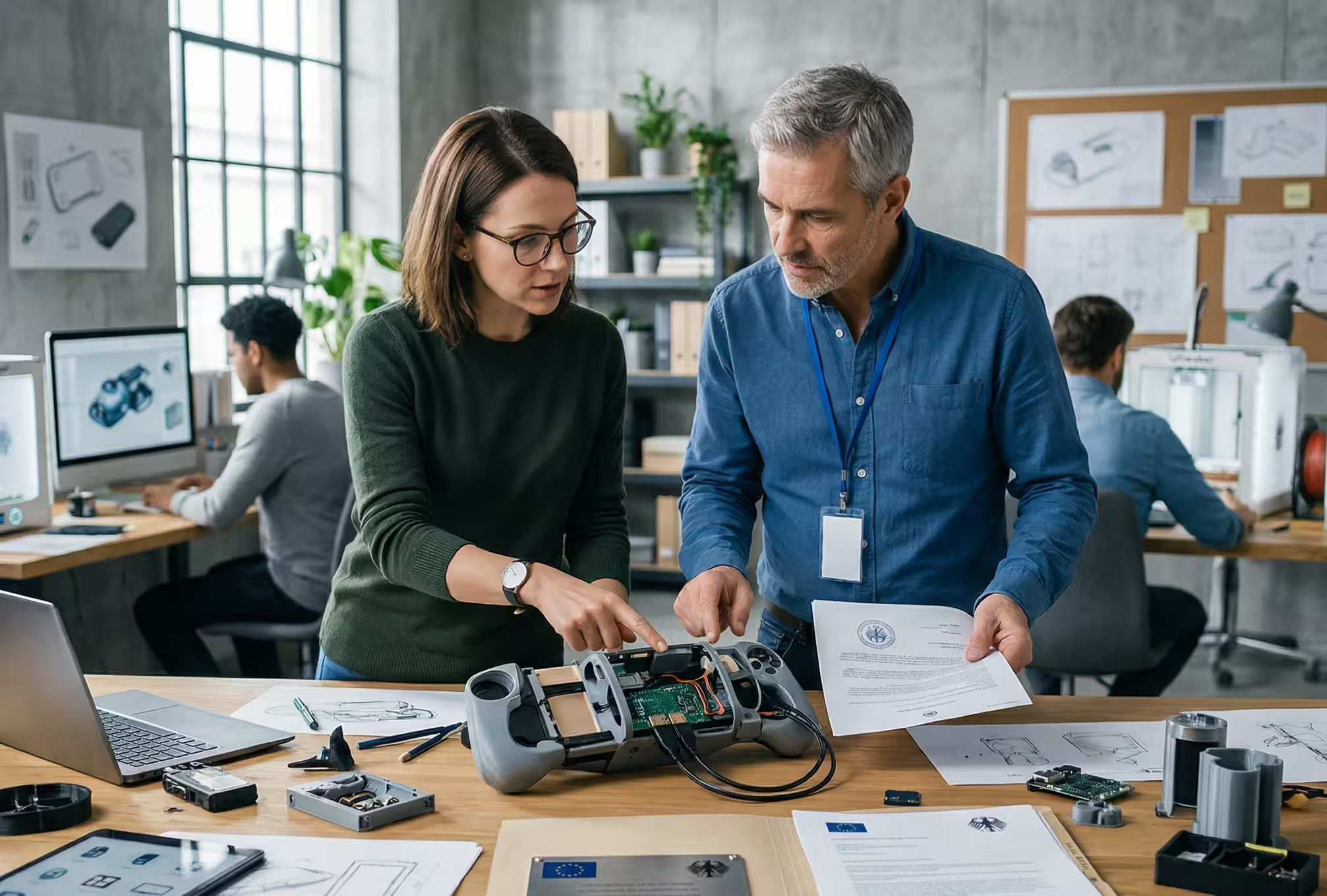
Design for Manufacturing and Assembly (DFMA) considers production processes, materials, and assembly steps from the beginning. This doesn't just save costs, it prevents expensive correction loops in later development phases. How we implement this approach in practice is described on our Design for Manufacturing and Assembly service page.
4. Sustainability - The Product must be responsibly designed
Sustainability in product design doesn't mean sacrificing function or aesthetics. It means thinking resource-efficiently from the start: Less material, longer lifespan, repairable constructions, recyclable components.
This isn't just ecologically sensible – it creates clear competitive advantages, as customers and regulations increasingly demand it. The EU's Ecodesign Regulation increasingly makes sustainable design mandatory, not optional, for many product categories. More on our sustainable product design service page.
The Product Design Process: From Problem to Solution
Good product design doesn't follow a rigid recipe, but it does follow proven logic. These five phases describe how a vague idea becomes a market-ready product:
Phase 1 - Research & Problem Understanding: Before anything is designed, comes deep understanding of the problem. Who are the users? What are their frustrations with existing solutions? What technical constraints exist? What manufacturing capacities are available?
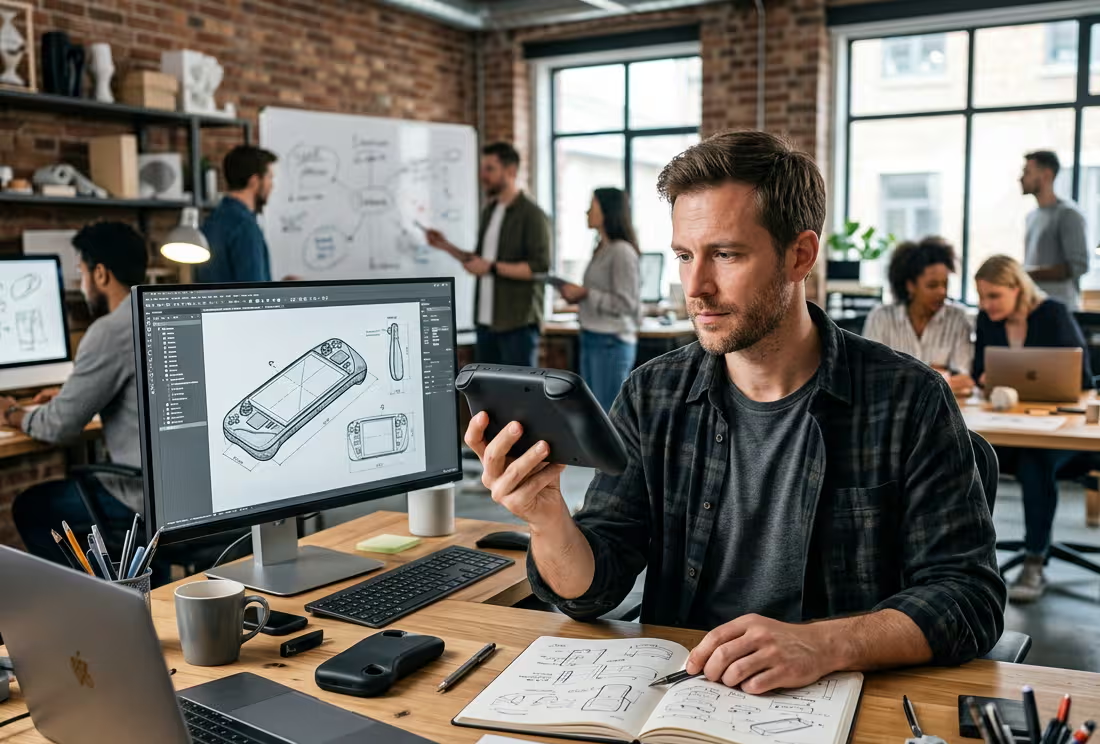
Phase 2 - Concept Development: In this phase, initial ideas emerge – quickly, sketchy, without claims to perfection. The goal is breadth: trying many directions to identify the most promising. This is where interdisciplinary collaboration between designers and engineers pays off.
Phase 3 - Refinement & Prototyping: The best concepts are refined and transformed into tangible prototypes. Whether 3D printing, CNC-milled models, or digital simulations – prototypes make abstract ideas testable. Finding errors in this phase is cheap. Finding errors in series production is expensive.
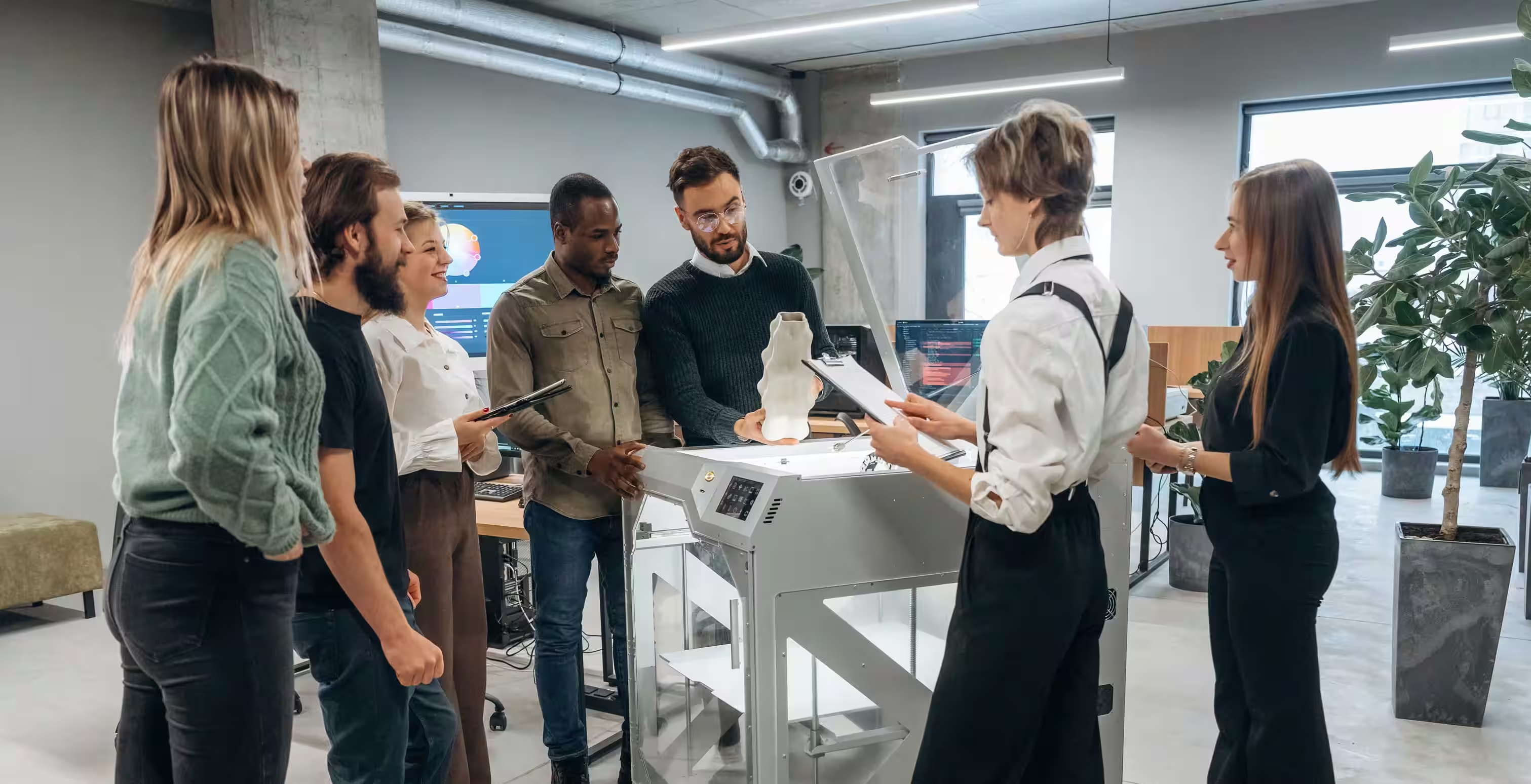
Phase 4 - Testing & Iteration_ Prototypes are tested - with real users, under real conditions. What works? What doesn't? Each iteration brings the product closer to its final form.
Phase 5 - Design Finish & Production PreparationThe final design is translated into production-ready data: CAD models, technical drawings, material specifications. Simultaneously, scalability is ensured - from prototype to small series, from small series to mass production.
When Does a Company Need Professional Product Design?
A question we often hear in initial conversations: "Do we really need a design agency, or can we handle this internally?"
The honest answer: It depends. But there are typical situations where external product design brings clear advantages:
- New product development without internal design team: The most common case. Engineers are present, but the design-focused and user-centered perspective is missing.
- Redesign of an established product: An existing product needs visual or functional updating without changing the technical foundation.
- Market entry into new segments: A product previously sold B2B should enter consumer markets. Or vice versa. Design requirements are fundamentally different.
- Cost pressure in manufacturing: The current design is too complex, too expensive to produce, too error-prone in assembly. Manufacturing-oriented redesign is the solution.
- Award strategy: Design awards like the iF Design Award or Red Dot Award aren't vanity, they're B2B purchase arguments. They signal quality before the buyer touches the product.
What Does Product Design Cost?
This is one of the most frequently asked questions and one that can't be answered with a blanket statement. The range is wide because the tasks are wide: A simple housing redesign is different from the complete development of a medical device.
What we can say: Professional product design isn't a cost center, but an investment. Better-designed products sell better, have fewer returns, can be manufactured more efficiently, and strengthen the brand. The ROI is real, even if it's harder to enter into a spreadsheet than material costs.
Conclusion: Product Design Isn't a Department – It's a Mindset
The best products don't emerge because someone eventually asks how it should look. They emerge because design is considered from the first minute - together with engineers, manufacturing experts, and real users in mind.
Product design is the difference between a product that functions and a product that convinces.
Are you currently developing a new product or want to take an existing one to the next level? Let's talk about it.